
Surround Sound & Whole-House Audio
Immersive 5.1 & 5.2 surround for your living room — or music in every room of the house. In-wall, in-ceiling, and hidden speakers, placed and calibrated for your space.
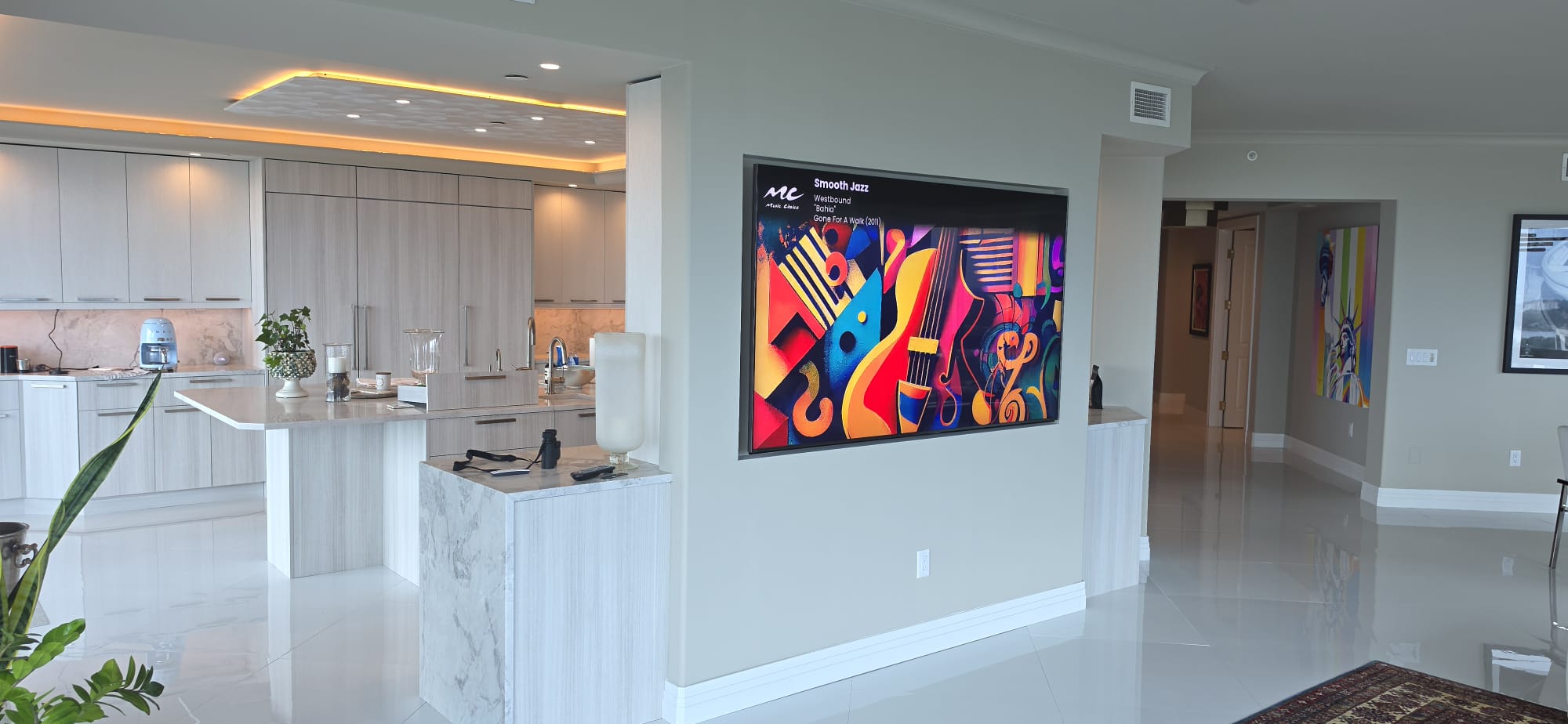
Transform Your Living Room Into an Audio Experience
A high-quality surround sound system creates an immersive experience that transforms how you enjoy movies, music, and gaming in your home. Whether you are watching the latest blockbuster, streaming your favorite playlist, or battling through an intense gaming session, surround sound places you right in the middle of the action.
Modern surround sound systems have come a long way from the days of bulky receivers and tangled wires. Today's options range from sleek soundbars to invisible in-wall speakers, giving you theater-quality audio without sacrificing your living room's aesthetics. At Entertainment Pros, we specialize in designing and installing surround sound systems tailored to your room, your lifestyle, and your budget.
Serving Pinellas County from our base in Palm Harbor, we have installed hundreds of surround sound systems in homes across Clearwater, St. Petersburg, Dunedin, Largo, and beyond. Every room is different, and every homeowner has unique preferences — that is why we offer a consultative approach to find the perfect solution for you.
Speaker Configurations for Every Style
From visible bookshelf setups to completely invisible installations, we have a configuration that fits your home and aesthetic preferences.
Bookshelf Configuration
Perfect for homeowners who appreciate visible, high-quality speakers. This setup features Monitor Audio Radius bookshelf speakers paired with a SpeakerCraft subwoofer for rich, room-filling bass. The bookshelf design allows flexible placement on shelves, stands, or wall brackets while delivering exceptional audio clarity and warmth.
Discrete Aesthetics
For those who want incredible sound without seeing a single speaker. Stealth Acoustics invisible speakers mount behind drywall and are completely hidden from view. Monitor Audio ceiling-mounted surrounds handle directional sound, while dual SpeakerCraft subwoofers deliver deep, balanced bass throughout the room. The result is a clean, modern aesthetic with no compromise on audio quality.
Concealed Configuration
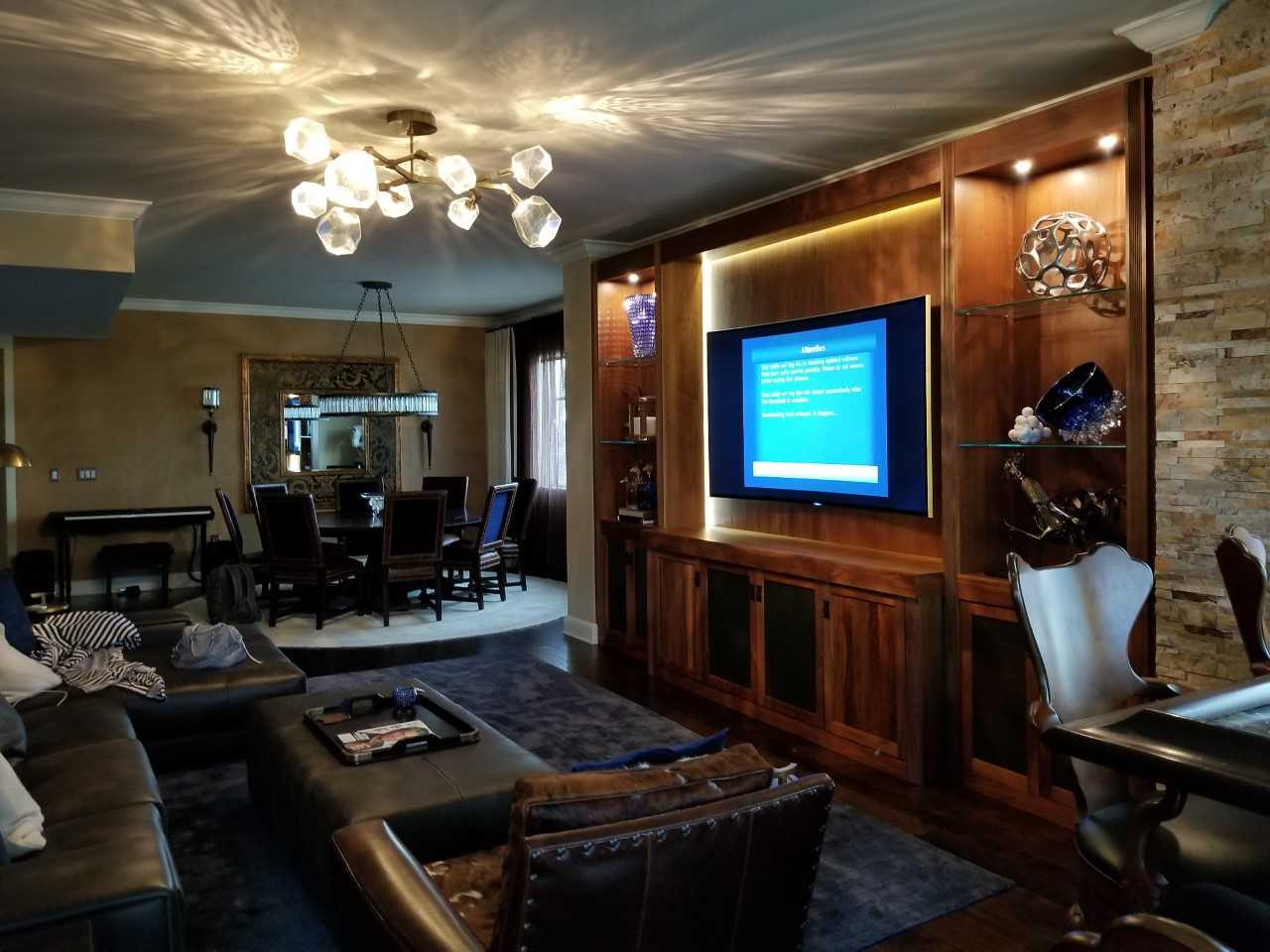
A creative solution that hides traditional speakers inside custom cabinetry. Monitor Audio Silver series speakers are placed inside a vented custom cabinet, allowing sound to project freely while keeping the speakers out of sight. This approach works beautifully in homes with built-in entertainment centers or media walls where aesthetics are paramount.
Ceiling Configuration
Ideal for open floor plans and rooms where wall space is limited. Monitor Audio Controlled Performance in-ceiling speakers are flush-mounted into the ceiling, providing 360-degree sound coverage with a minimal visual footprint. These speakers feature angled drivers that can be aimed toward the listening area for precise audio delivery.
Why Invest in a Surround Sound System?
A professionally installed surround sound system delivers benefits that go far beyond better audio.
Enhanced Audio Quality
Multi-channel surround sound reproduces audio the way directors and artists intended, with distinct channels for dialogue, effects, and music that your TV speakers simply cannot match.
Immersive Experience
Feel the rumble of an explosion from behind you, hear rain falling all around, or experience a live concert from the best seat in the house. Surround sound puts you inside the content.
Increased Home Value
A professionally installed audio system is a desirable home feature that appeals to buyers. Integrated systems with clean wiring and quality components add real value to your property.
Long-Term Enjoyment
Unlike a TV that you might replace every five to seven years, quality speakers and amplifiers can last decades. A well-chosen system is an investment in years of entertainment.
Surround Sound Systems by Budget
Whether you are looking for an affordable upgrade or a no-compromise audiophile system, we have options at every price point.
Great sound does not have to break the bank. A quality soundbar and subwoofer combo delivers a significant upgrade over built-in TV speakers at an accessible price.
- Soundbar with wireless subwoofer
- Sonos Beam or Sonos Ray options
- Virtual surround processing
- Easy self-setup or professional install
- Expandable with rear speakers later
The sweet spot for most homeowners. A dedicated receiver with separate speakers delivers true surround sound with excellent clarity and power.
- Yamaha AV receiver with room calibration
- Bookshelf speakers for front channels
- Dedicated center channel speaker
- Basic subwoofer for low-frequency effects
- Programmed universal remote control
For the discerning audiophile who demands the best. Premium components with professional calibration deliver reference-quality sound.
- Yamaha Aventage receiver
- Dual subwoofers for even bass distribution
- Monitor Audio speakers with C-Cam gold dome tweeters
- URC or Elan whole-house control system
- Professional acoustic calibration
Installation & Choosing a Local Installer
A surround sound system is only as good as its installation. Professional setup ensures optimal performance and a clean, finished look.
Optimal Equipment Selection
A professional installer evaluates your room size, layout, and usage to recommend the right equipment. No guessing, no over-spending, no under-performing components.
System Compatibility
Receivers, speakers, subwoofers, and control systems all need to work together seamlessly. We ensure every component is matched for impedance, power handling, and connectivity.
Professional Installation
Clean wire runs, secure mounting, hidden cables, and proper speaker placement. Our installations look as good as they sound, with no exposed wiring or makeshift solutions.
Post-Installation Support
After installation, we calibrate your system, walk you through operation, and provide ongoing support. If something needs adjustment, we are a phone call away.
How to Choose the Right Installer
Not all installers are created equal. Here is what to look for when selecting a surround sound professional in Pinellas County.
Speaker Placement for Optimal Sound
Proper speaker placement is one of the most important factors in surround sound performance. Even the best speakers will underperform if they are positioned incorrectly. Here are the fundamentals our installers follow for every project:
Front Left & Right Speakers
Position front speakers at ear level when seated, approximately 45 degrees apart from the center listening position. These speakers handle the majority of your music and movie soundtracks, so placement here matters most. Avoid placing them too close to walls, which can cause bass buildup and muddy the sound.
Center Channel Speaker
The center channel handles dialogue and is the most important speaker for movies and TV shows. Place it directly above or below your TV screen, angled toward ear level. If placed below the TV, tilt it slightly upward. Clear, intelligible dialogue depends on getting this speaker right.
Surround Speakers
Surround speakers should be positioned behind and slightly above the listening area. For a 5.1 system, place them at roughly 110 to 120 degrees from the center. They should be about two to three feet above ear level to create an enveloping sound field without being distractingly directional.
Subwoofer Placement
Subwoofer placement is less critical than other speakers because low frequencies are non-directional, but it still matters. Placing a subwoofer in a corner amplifies bass output, which can be desirable in larger rooms but overwhelming in smaller spaces. Experiment with placement along the front wall, one-third of the way from the corner, for balanced bass response. In a dual-subwoofer setup, placing subs at opposite walls evens out bass response across the room.
Room Acoustics & How They Affect Sound
Your room's surfaces, furnishings, and dimensions all play a role in how your surround sound system performs. Understanding basic acoustics helps you get the most from your investment.
Hard Surfaces Reflect Sound
Tile floors, glass windows, bare walls, and hardwood surfaces reflect sound waves, creating echoes and reverberation. In rooms dominated by hard surfaces, sound can become harsh and fatiguing. This is common in Florida homes with tile floors and large sliding glass doors. Solutions include area rugs, curtains, and acoustic panels that reduce reflections without changing your decor.
Soft Surfaces Absorb Sound
Carpet, upholstered furniture, curtains, and bookshelves absorb sound energy, reducing reflections and taming the room. A room that is too absorptive can sound dead and flat, while one that is too reflective will sound echoey and harsh. The goal is a balance — enough soft surfaces to control reflections while retaining liveliness. Our installers assess your room's acoustics during consultation and can recommend treatments if needed.
Florida's open floor plans present unique acoustic challenges. Large, open living areas connected to kitchens and dining rooms allow sound to disperse, reducing the impact of your surround system. Strategic speaker placement and calibration help compensate, and in some cases, adding a second subwoofer provides more even bass coverage in open spaces.
Surround Sound Setup Steps
Here is what goes into a professional surround sound installation, from unboxing to final calibration.
Wireless Sound Systems: Bluetooth vs WiFi
Wireless speakers offer convenience, but not all wireless technologies are equal. Here is how the two main options compare.
Bluetooth
Bluetooth is universal, simple, and works with virtually every phone and tablet. However, it has limitations for serious audio applications.
- Range: typically 30 feet
- Compressed audio signal (lossy)
- Single-room only
- Simple pairing, no network needed
- Higher latency (noticeable on video)
- Best for casual, portable use
WiFi
WiFi-based systems like Sonos, Apple AirPlay, and Yamaha MusicCast deliver higher-quality audio with whole-house capabilities.
- Range: entire home network
- Lossless, full-resolution audio
- Multi-room synchronized playback
- Requires home WiFi network
- Low latency, suitable for video
- Best for installed, whole-home systems
For living room surround sound, we generally recommend WiFi-based systems over Bluetooth. The higher audio quality, lower latency, and multi-room capabilities make WiFi the better foundation for a serious home audio system. Bluetooth works well as a secondary input for quick phone pairing, but should not be the primary connection for a surround sound setup.
Sonos Soundbars & Speaker Separation
Sonos has become one of the most popular soundbar brands, and for good reason. The Sonos Arc and Sonos Beam deliver impressive sound quality from a single bar, with Dolby Atmos support on the Arc for overhead effects. They integrate seamlessly with the Sonos ecosystem, support AirPlay 2, and are controlled through an intuitive app.
Sonos Soundbar Pros
- Excellent sound quality for their size
- Clean, single-unit aesthetic — no receiver or visible speakers
- Easy setup with the Sonos app and TruePlay room calibration
- Expandable: add a Sonos Sub and rear surrounds for a full 5.1 system
- Multi-room music when paired with other Sonos speakers
- Voice assistant support (Alexa, Google Assistant)
Sonos Soundbar Cons
- Limited to the Sonos ecosystem for surround expansion
- No HDMI passthrough — relies on HDMI eARC from the TV
- Cannot match the staging and separation of discrete component speakers
- Higher cost per channel compared to traditional AVR-based systems
Soundbar vs Separate Speakers
Soundbars combine multiple speaker drivers into a single enclosure, which is convenient but physically limits how wide the sound stage can be. Separate speakers, placed correctly around the room, create genuine surround separation that a soundbar simulates but cannot fully replicate. For casual TV watching and music, a soundbar is often sufficient. For movies, gaming, and serious music listening, separate speakers with a dedicated receiver deliver a noticeably better experience.
Many of our clients start with a Sonos soundbar for simplicity and later upgrade to a full component system when they want to take their audio to the next level. We install both types and can help you choose the right path based on your priorities.
5.1 vs 5.2 Surround Sound
If you have researched surround sound systems, you have likely encountered numbers like 5.1, 5.2, 7.1, and even 7.2.4. Here is what they mean and how to choose.
What the Numbers Mean
The first number represents the main speaker channels (front left, center, front right, surround left, surround right). The second number is the subwoofer count. So a 5.1 system has five speakers and one subwoofer, while a 5.2 system has five speakers and two subwoofers.
5.1 Surround Sound
The 5.1 configuration is the most common home surround sound setup and has been the standard for decades. Five speakers provide full directional audio, and a single subwoofer handles low-frequency effects. For most living rooms under 400 square feet, a 5.1 system provides excellent performance. This is the configuration included on most Blu-ray discs and streaming content.
5.2 Surround Sound
Adding a second subwoofer solves a common problem: uneven bass response. Low frequencies create standing waves in a room, meaning bass can be booming in one spot and nearly absent in another. Two subwoofers placed strategically smooth out these inconsistencies, delivering consistent bass across the entire seating area. We recommend 5.2 for larger living rooms, open floor plans, and rooms where multiple seating positions need good bass coverage.
Both configurations use the same five speakers — the difference is purely in bass performance and consistency. If your room is large or open, or if you have multiple seating areas, the investment in a second subwoofer is well worth it.
Front-Firing vs Ceiling-Mounted Speakers
Each speaker type has distinct advantages depending on your room and priorities.
Front-Firing Speakers
Traditional speakers that project sound directly toward the listener from a fixed position on walls, stands, or shelves.
- Best imaging and sound staging
- Most accurate tonal reproduction
- Easier to aim at listening position
- Visible in the room (part of the aesthetic)
- Require stands, shelves, or wall brackets
- Best for dedicated listening rooms
Ceiling-Mounted Speakers
Flush-mounted into the ceiling for a completely invisible audio solution that keeps walls and floors clear.
- Invisible — no visual impact on the room
- 360-degree coverage for background music
- Ideal for open floor plans and multi-use rooms
- Some models have aimable tweeters
- Require ceiling access for installation
- Best for aesthetics-first installations
In practice, many of our installations combine both types. Front-firing speakers handle the critical front channels where imaging matters most, while ceiling speakers serve as surrounds where their overhead position actually enhances the immersive effect. This hybrid approach gives you the best sound quality where it counts and the cleanest look where it is visible.
Optimizing Surround Sound for Your Room Layout
Different room types require different approaches. Here is how we handle the most common layouts in Pinellas County homes.
Open Floor Plans
Florida homes frequently feature open layouts where the living room flows into the kitchen and dining area. These spaces require higher-powered speakers and dual subwoofers to fill the larger volume. Ceiling speakers work well for surrounds since wall placement options are limited. We use the receiver's room calibration to compensate for the open-plan acoustics.
Small Rooms
Smaller living rooms and dens benefit from compact speakers and a single, well-placed subwoofer. In tight spaces, bookshelf speakers on stands or wall-mounted compact speakers deliver excellent sound without overwhelming the room. We often recommend a Sonos system or compact AVR setup for rooms under 200 square feet.
Multi-Purpose Spaces
Rooms that serve as both a living room and a home office, playroom, or guest room need flexible audio solutions. In-ceiling speakers provide ambient sound without taking up floor space, and systems with zone control let you adjust volume independently. Smart home integration allows you to switch between TV surround mode and background music with a single button press.
New Construction & Renovations
If you are building a new home or renovating, this is the ideal time to install surround sound. We can run speaker wire through walls and ceilings before drywall goes up, install in-wall speaker boxes, and pre-wire for future expansion. Pre-wiring during construction is significantly less expensive than retrofitting and results in the cleanest possible installation.
Surround Sound Installations
See examples of surround sound systems we have designed and installed in homes across Pinellas County.
.jpg)
.jpg)
.jpg)