
You open the cabinet that holds your home’s audio-video equipment and immediately want to close it again. Wires are twisted together, hanging loose, or packed into a tangled nest. Some cables are disconnected. Others disappear behind equipment with no labels or clear destination. The sound works one day and cuts out the next. A television loses its signal. A speaker stops playing. Eventually, the entire system becomes so frustrating that no one wants to use it.
It is tempting to think the answer is a package of zip ties and an afternoon of cable cleanup. However, if you don’t know what you’re doing or what goes where and what does what, you can rapidly take your system from bad to worse. Also, real AV wiring solutions require much more than making the cabinet look better.
A neat bundle of cables can still contain damaged connections, incorrect terminations, insufficient slack, poor signal paths, wires that were never properly installed or no longer necessary. In those cases, tightening everything together may hide the problem instead of solving it.
At Entertainment Pros, we look beyond the visible mess. We identify why the equipment is not working, correct the wiring, improve access to the components, and organize the system so it can be maintained in the future.
The goal is not simply to create a cabinet that looks better. The goal is to create an audio-video system that works reliably every time you press a button.
Why Messy AV Wiring Causes More Than an Appearance Problem
An AV equipment cabinet is the central hub for many of the systems you use throughout your home. Depending on your setup, it may contain receivers, amplifiers, streaming devices, network equipment, control processors, cable boxes, power management equipment, and distribution components.
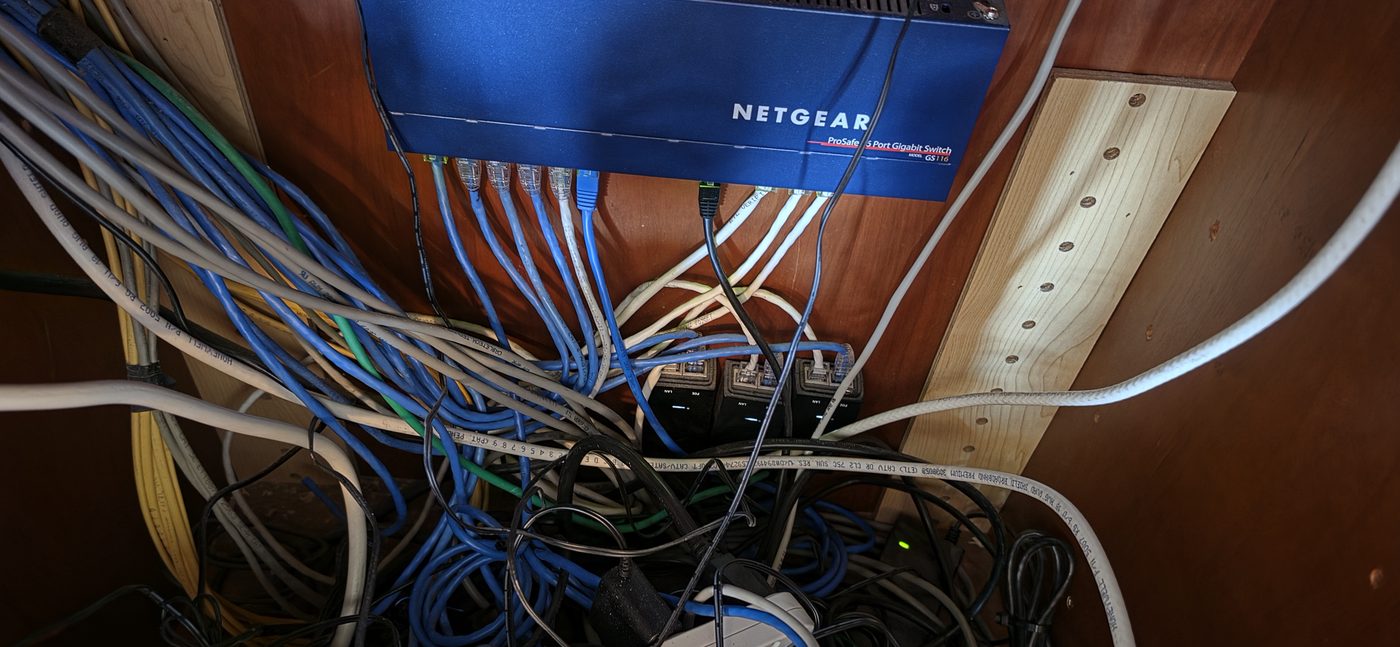
Every device may require several connections. These can include:
- Power cables
- HDMI cables
- Speaker wires
- Ethernet cables
- Control wires
- Audio cables
- Coaxial cables
- Network switches and patch cables
When those connections are installed without a plan, small issues quickly become larger problems.
A cable may be stretched too tightly behind a component. Moving the equipment can then pull the connection loose. A wire may be bent sharply, damaged, or pinched. Unlabeled wires make troubleshooting difficult because no one knows where each cable goes. Too sharp of a bend can cause an optical cable to no longer transmit sound from your streaming TV to your surround sound system.
Poorly repaired wires can create intermittent connections. This means the system may work temporarily before losing sound, video, control, or network connectivity.
Heat can also become a concern when equipment is packed into a cabinet without proper spacing or airflow. Although organizing the wires does not solve every ventilation problem, professional cable management can improve access and prevent bundles from blocking important areas around the equipment.
A professional AV wiring cleanup should answer several questions:
- Are the correct cables being used?
- Are the connections secure?
- Is there enough slack to access the equipment?
- Can the components be removed without disconnecting everything?
- Are damaged or improvised connections affecting performance?
- Are the cables labeled and organized logically?
- Can another technician understand and service the system later?
That is why a professional cleanup is not just about appearance. It is about reliability, accessibility, performance, and long-term system management.
AV Wiring Solution 1: Install a Slide-Out or Rotating Equipment Rack
One of our clients had an AV system installed inside a kitchen island. When we opened the cabinet, we found a tangled collection of wires and equipment.
Some wires had become disconnected. Other connections were difficult to reach. All of them were a mess. The equipment was packed into the cabinet without a practical way to access the back of the components.
Nothing was working correctly.
The client looked at the cabinet and said, “This is an embarrassment.”
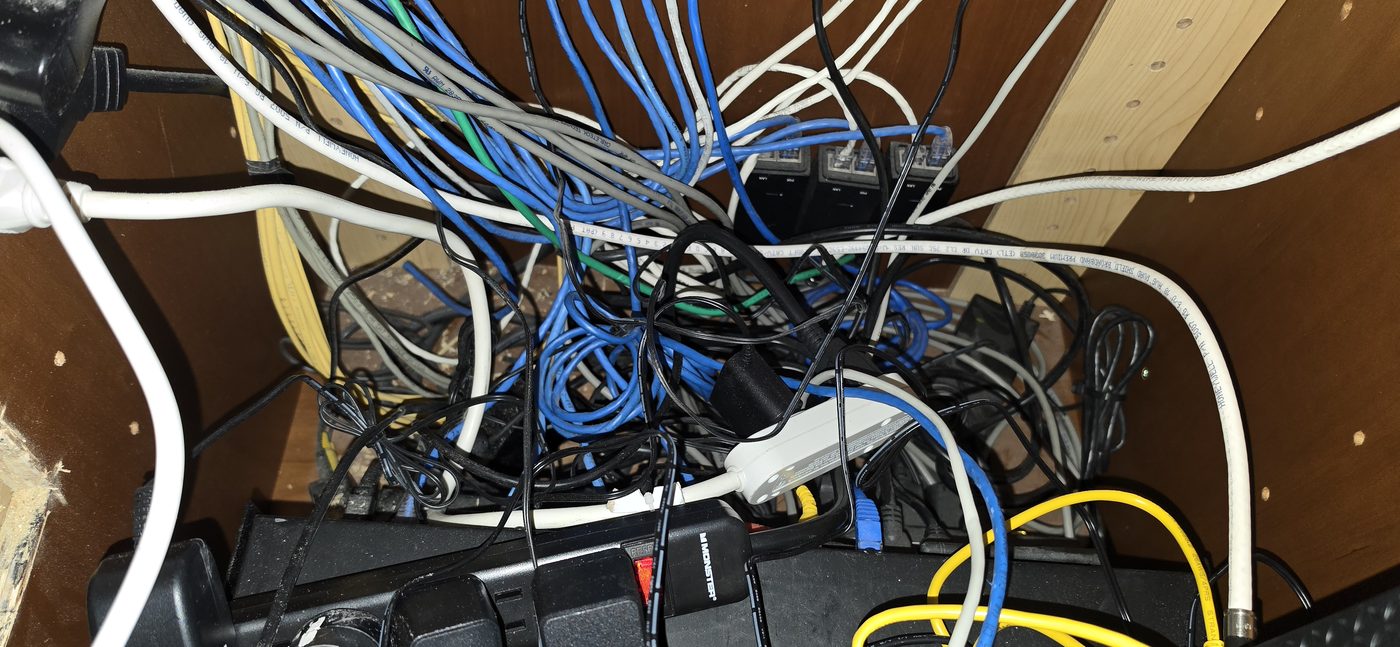
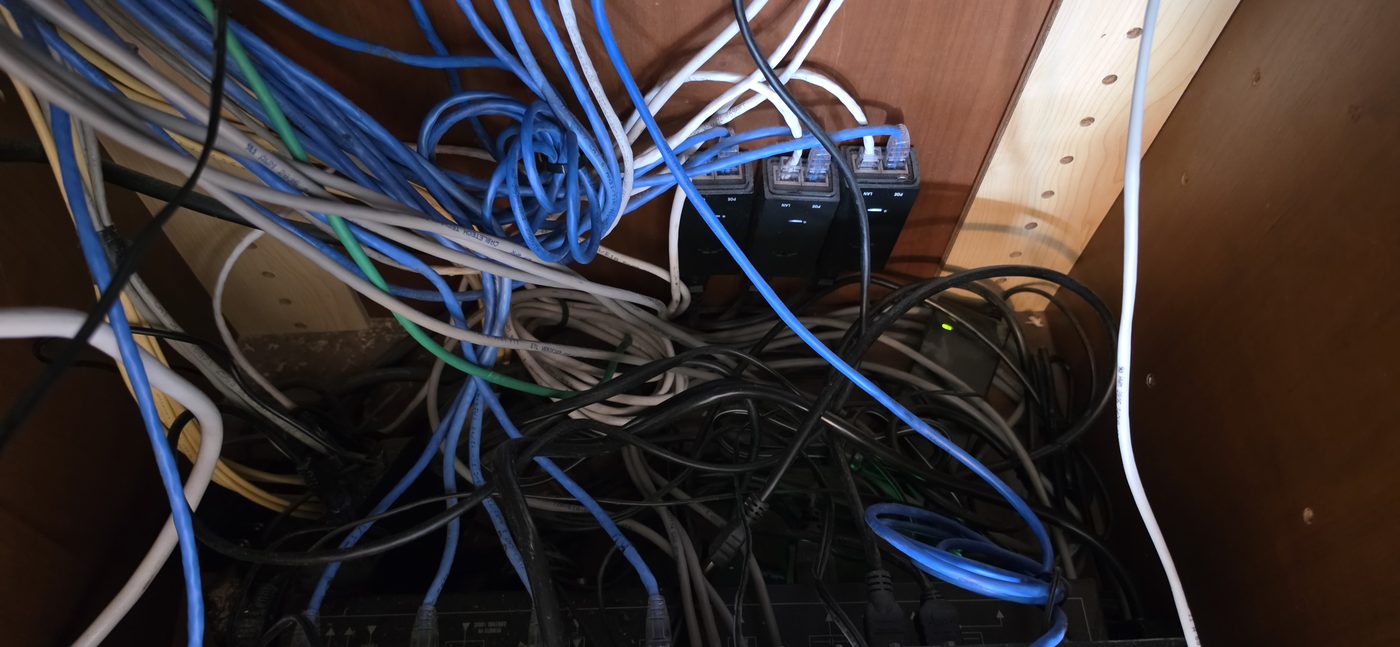
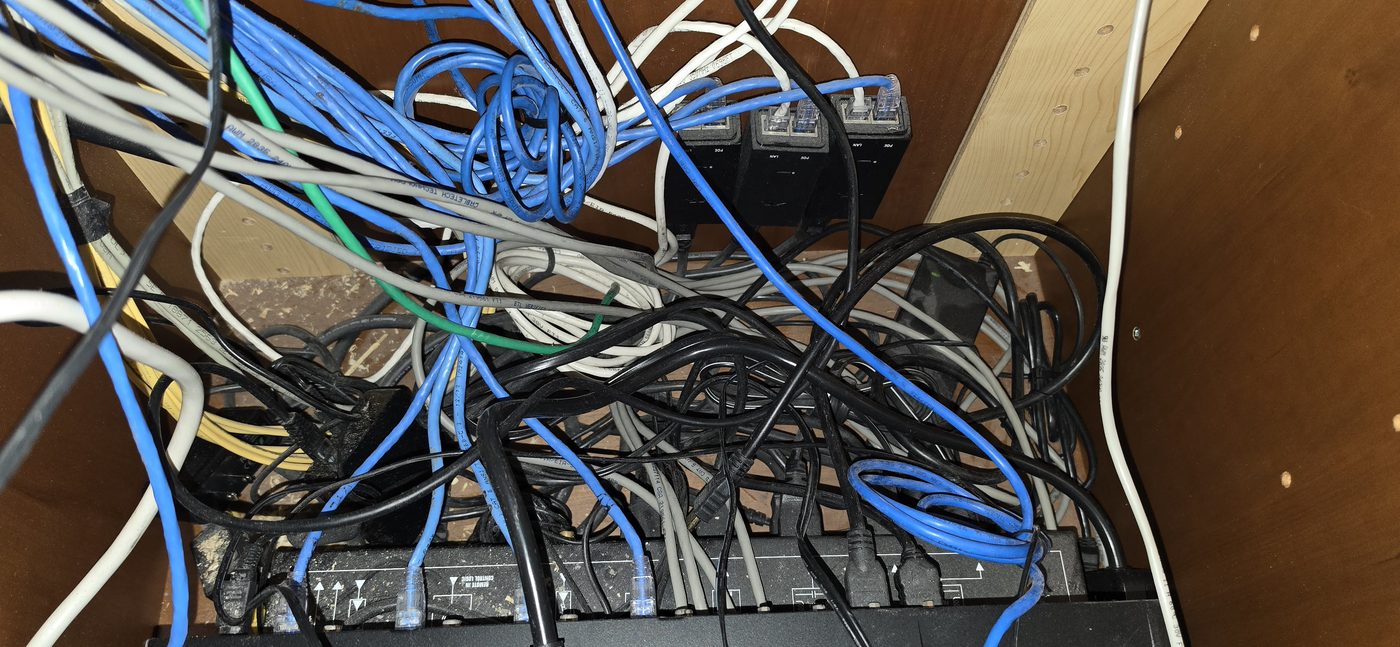
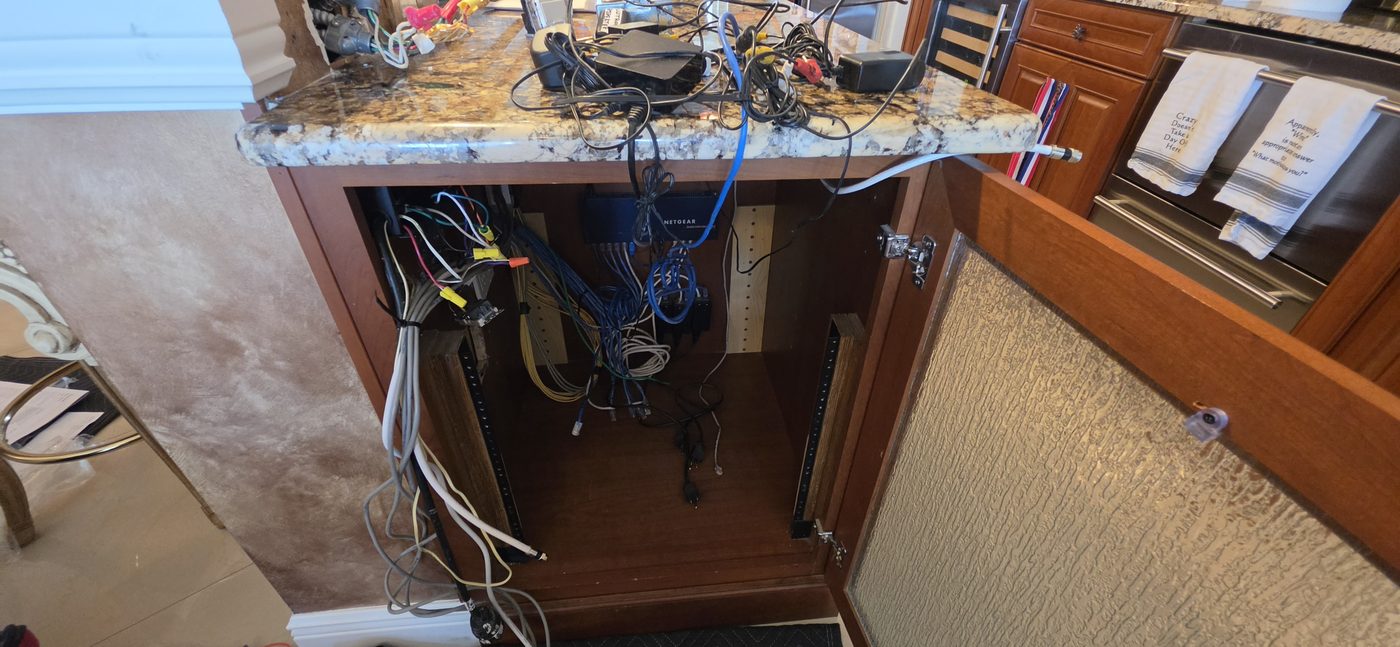
The problem was not limited to messy wiring. The cabinet lacked a functional system for managing the equipment. Every time someone tried to reach a connection, another cable could be pulled loose. There was no easy way to inspect the back of the components, trace a wire, replace a device, or troubleshoot a problem.
Our solution was to properly manage the system through a slide-out and rotating equipment rack.
Why a Slide-Out AV Rack Makes a Difference
A slide-out rack allows the equipment to move forward from the cabinet. A rotating rack can then provide access to the back of each component.
This is important because most AV connections are located behind the equipment. Without rear access, even a simple service call can become difficult. A technician may have to reach blindly into the cabinet or begin removing components just to inspect one connection.
With a properly installed rack, the equipment can be pulled out, rotated, inspected, and serviced without dismantling the entire system.
However, installing the rack was only part of the solution.
We also had to reroute and organize the wiring so the cables could move safely with the rack. If the cables were pulled too tightly, extending the rack could disconnect them. If we left too much uncontrolled slack, the wires could become tangled or pinched.
We created organized bundles with the correct amount of service slack. This allowed the rack to slide and rotate while keeping the connections secure.
Yes, we also tied the bundles correctly. However, the ties were the final part of the process, not the entire solution.
The finished cabinet was clean, accessible, and manageable. More importantly, the equipment worked.
Should a component need to be repaired or replaced in the future, the system can now be accessed without recreating the original mess.
You can explore more examples of professional equipment installation on our audio-video installation services page.
AV Wiring Solution 2: Replace Wires That Were Hacked Together
A wiring problem does not always look dramatic. Sometimes, the real issue is hidden beneath a small piece of electrical tape.
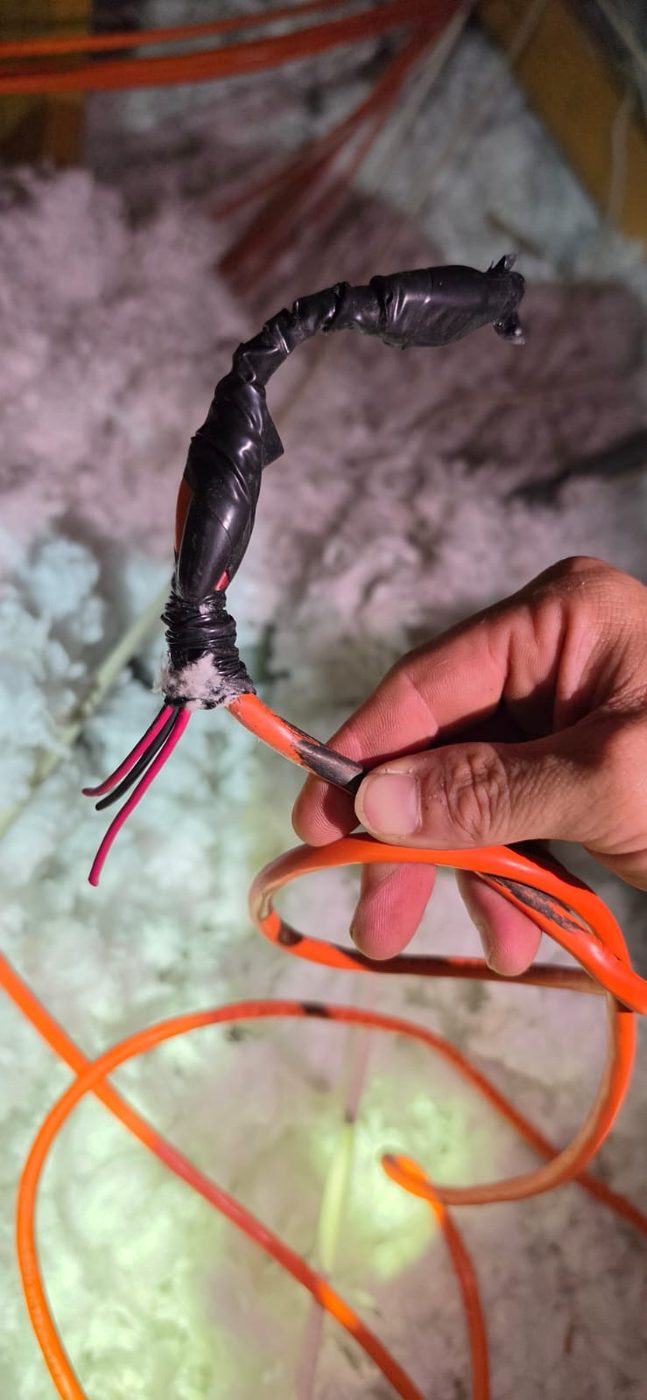
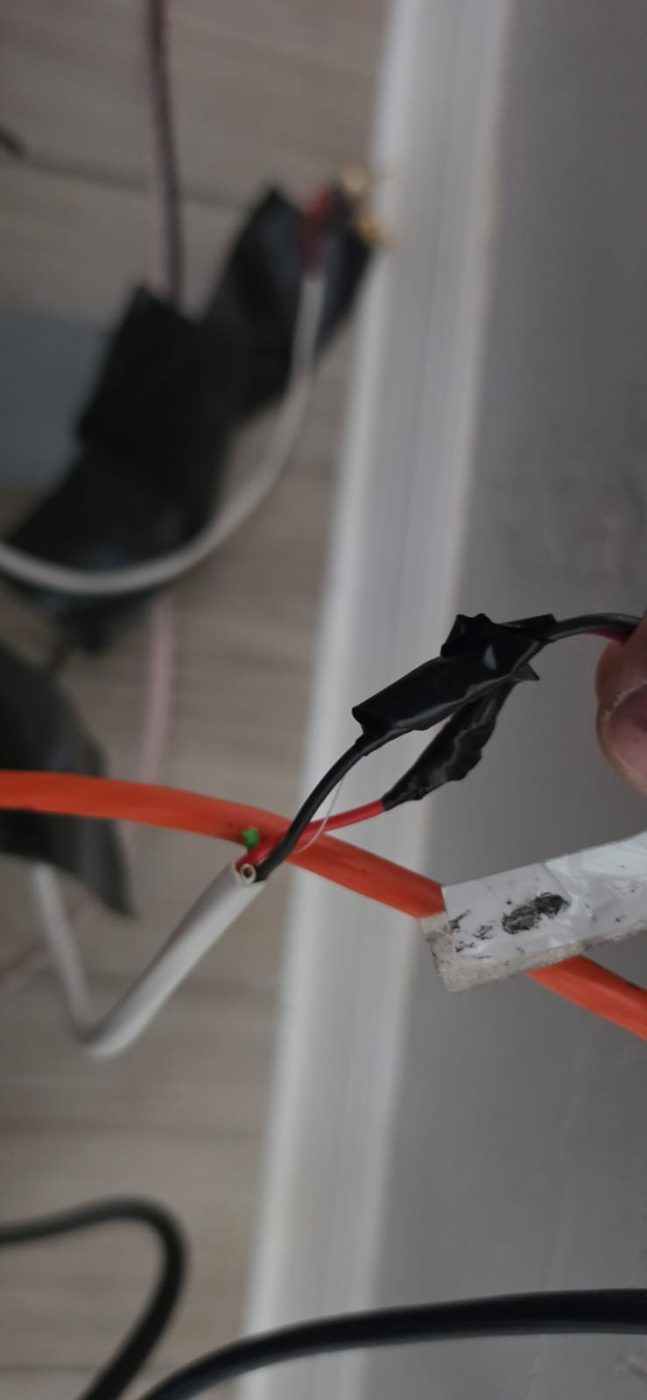
During another project, we discovered that wires had been twisted together and wrapped with electrical tape. Nothing to keep the wires connected securely. The work had been completed by one of the largest AV companies in the country.
Company size does not guarantee installation quality.
Low-voltage AV wiring does not normally present the same danger as household electrical wiring. However, that does not mean poor connections are acceptable. An unreliable low-voltage connection can still prevent speakers, controls, sensors, network devices, or other equipment from operating correctly.
A loose or exposed connection may produce intermittent problems. The equipment may work when the wire is positioned a certain way and stop when it moves. Two conductors may touch and cause a short. Signal quality may suffer. Troubleshooting becomes more difficult because the failure may appear and disappear.
Electrical tape does not correct a weak mechanical connection. It only covers it.
The Correct Way to Repair Damaged AV Wiring
The right repair depends on the cable, equipment, signal, location, and condition of the existing wire.
In some situations, a properly rated butt connector, crimp, shielding method, or manufacturer-approved termination may be appropriate. The connection must be secure, insulated, and suitable for the specific cable.
Improvised twist connections (wire nuts) are usually not a dependable substitute for the correct termination method.
Whenever practical, the best long-term solution may be to replace the compromised cable completely. A continuous wire run eliminates the questionable splice and reduces the number of possible failure points.
For this project, we ran new wires.
We did not want to cover the old repair, make it look neater, and hope it continued working. We wanted every connection to be tight, reliable, and installed correctly.
After the new cables were installed, we tested the equipment and confirmed that the system was operating as intended.
This is an important difference between cosmetic cable cleanup and expert AV wiring repair. Cosmetic cleanup organizes what is already there. Expert repair determines whether what is already there should remain at all.
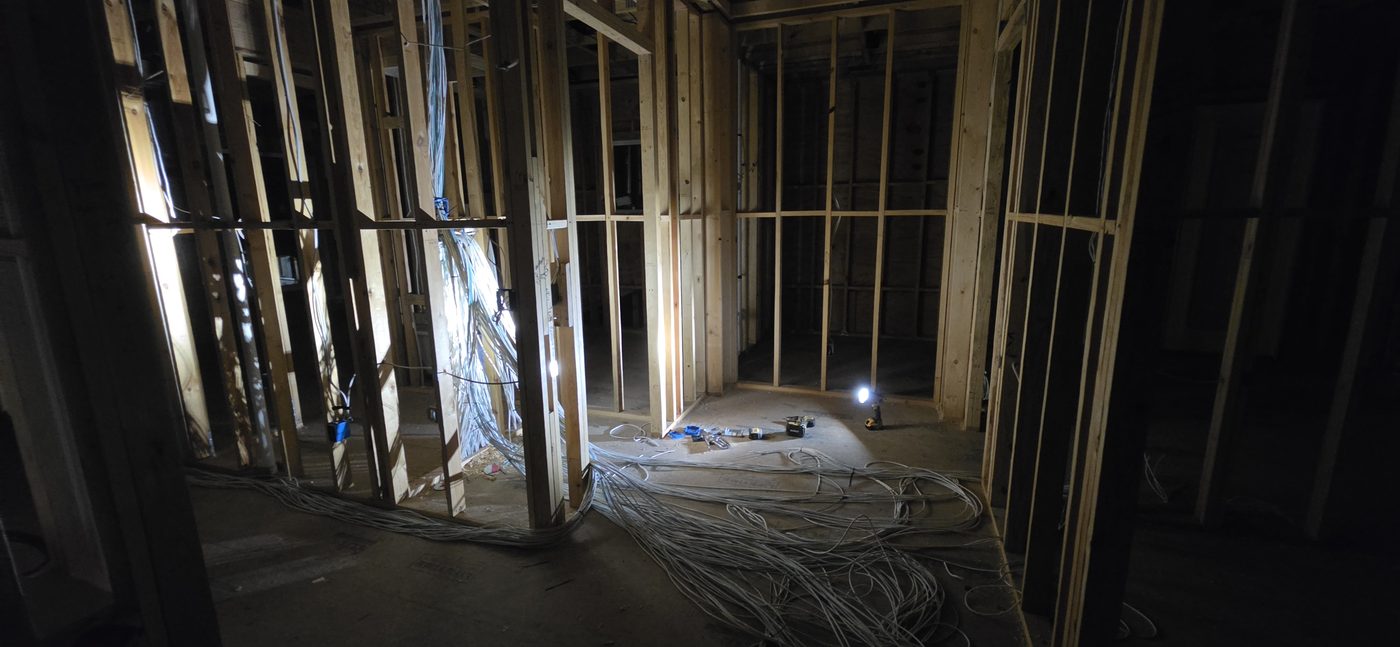
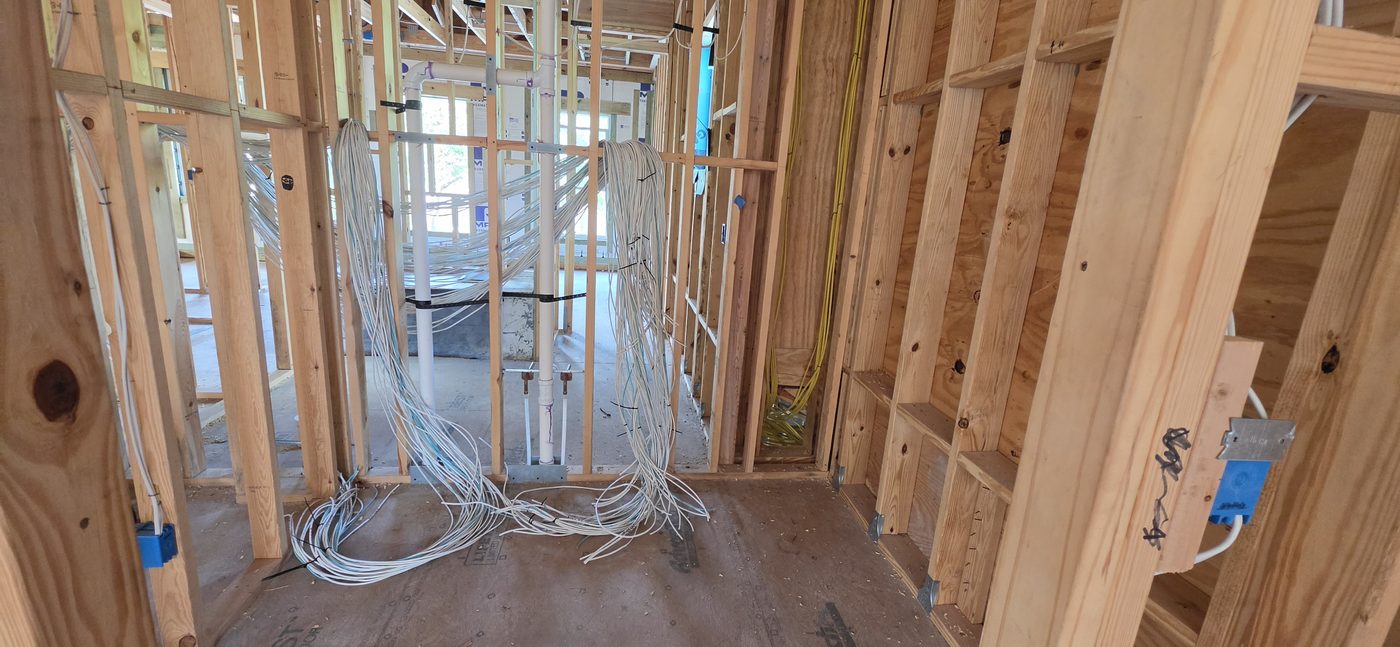
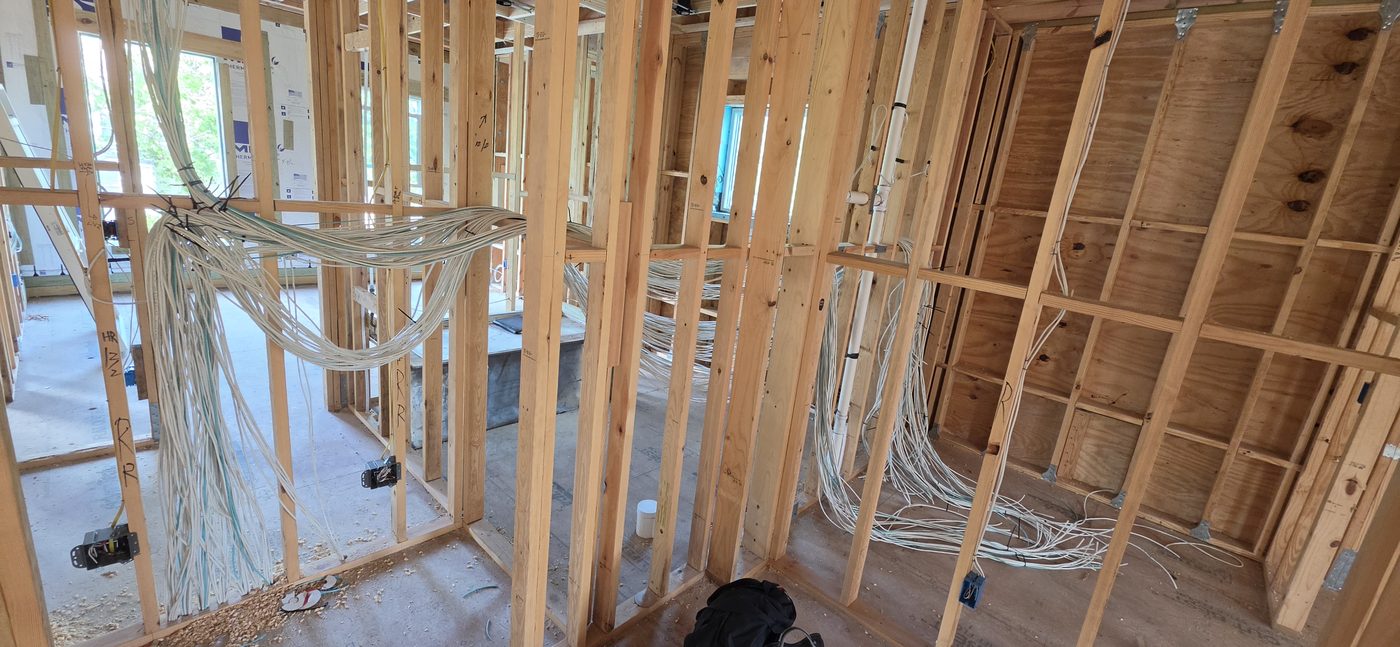
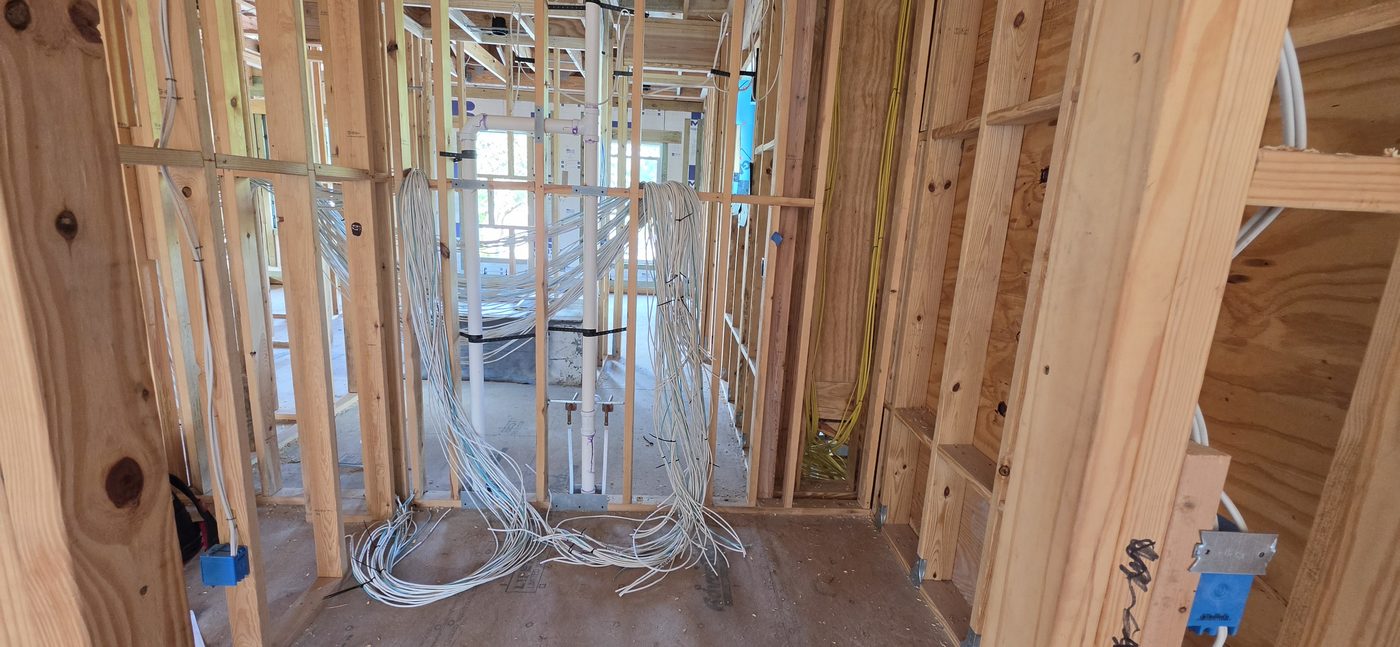
AV Wiring Solution 3: Prewire Before the Drywall Goes Up
Some of the best AV wiring solutions begin before the television, speakers, receivers, and control equipment are purchased.
They begin while the house is still being built.
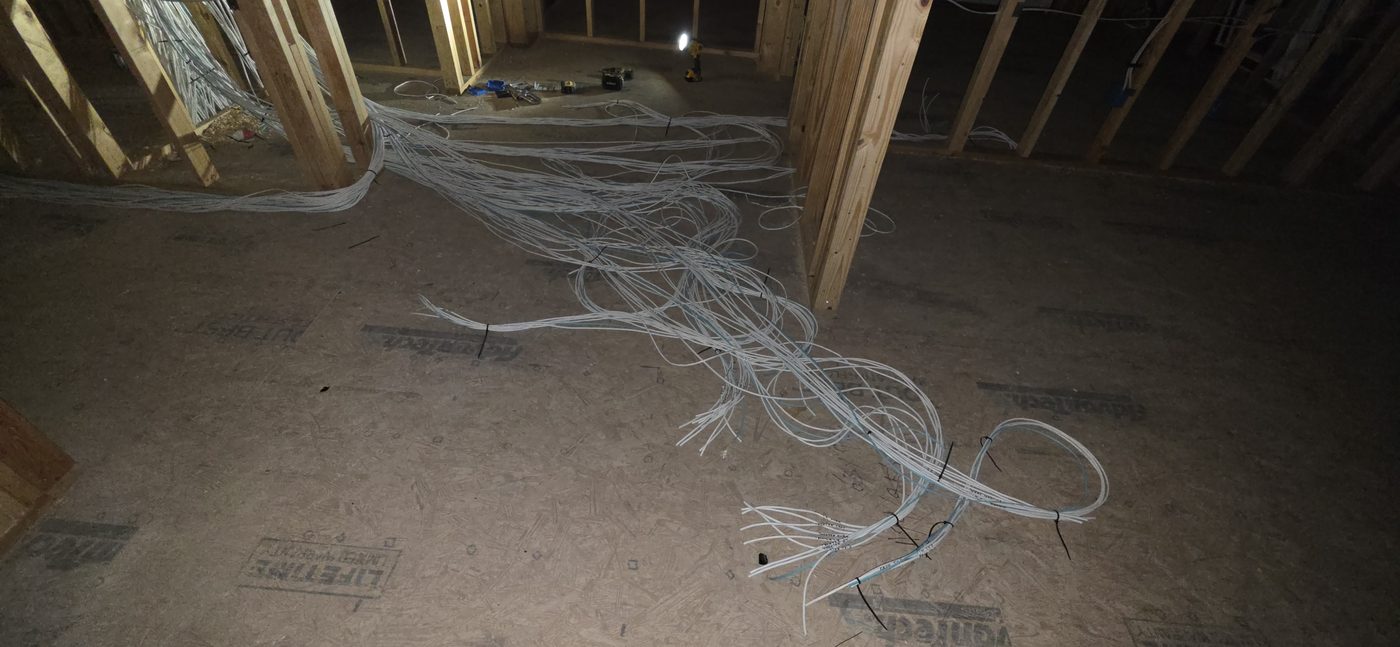
Homeowners building a custom home naturally spend time thinking about floor plans, kitchens, flooring, appliances, fixtures, countertops, paint colors, and finishes. Audio-video wiring may not receive the same attention.
Unfortunately, once the drywall goes up, many of the easiest and most affordable wiring opportunities disappear.
Prewiring means installing the low-voltage infrastructure while the walls and ceilings are still open. This gives your AV professional access to framing cavities and planned equipment locations before those areas are covered. You have necessary wiring in place now and in the future.
Professional industry organizations treat prewiring, trim-out, equipment racks, troubleshooting, and system verification as important parts of a professional smart home installation.
Prewiring a Custom Home Saves Money
Running wire through an open structure usually requires much less labor than fishing cable through finished walls.
After drywall is installed, the technician must identify possible pathways, navigate insulation and framing, avoid existing plumbing and electrical lines, and work around completed finishes.
Some cable routes may require attic or crawlspace access. Others may be difficult or impossible without opening part of a wall.
When the home is open, the wiring can be routed directly and efficiently. This reduces labor and gives the installer more control over cable placement.
You can also install wiring for future features without purchasing all the equipment immediately. The cable can be placed in the wall and properly documented until you are ready to complete the system.
Prewiring Prevents Cutting and Patching
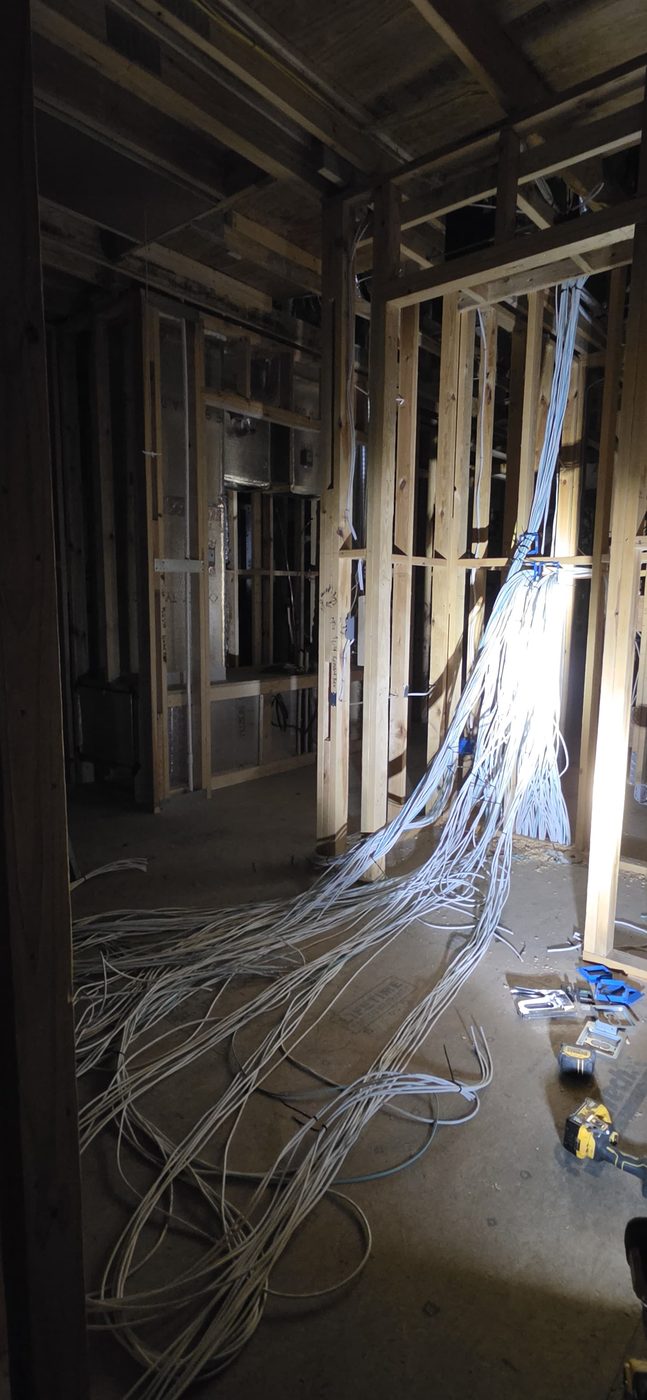
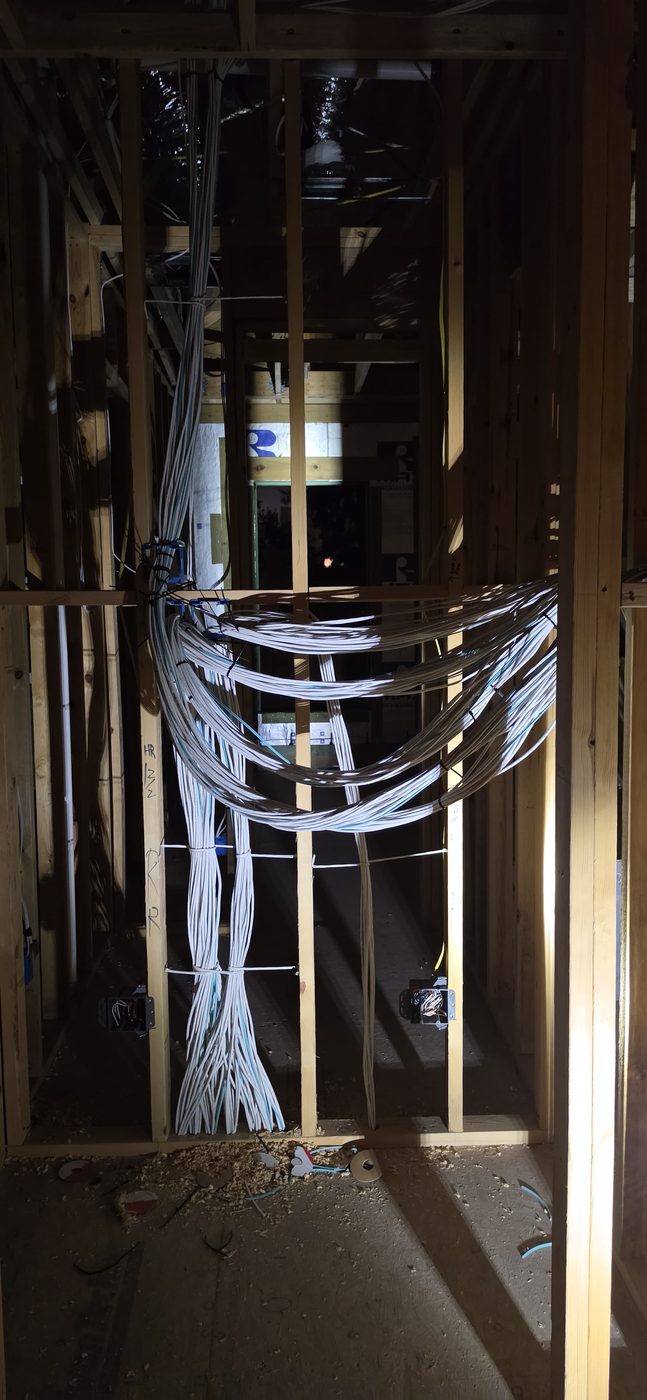
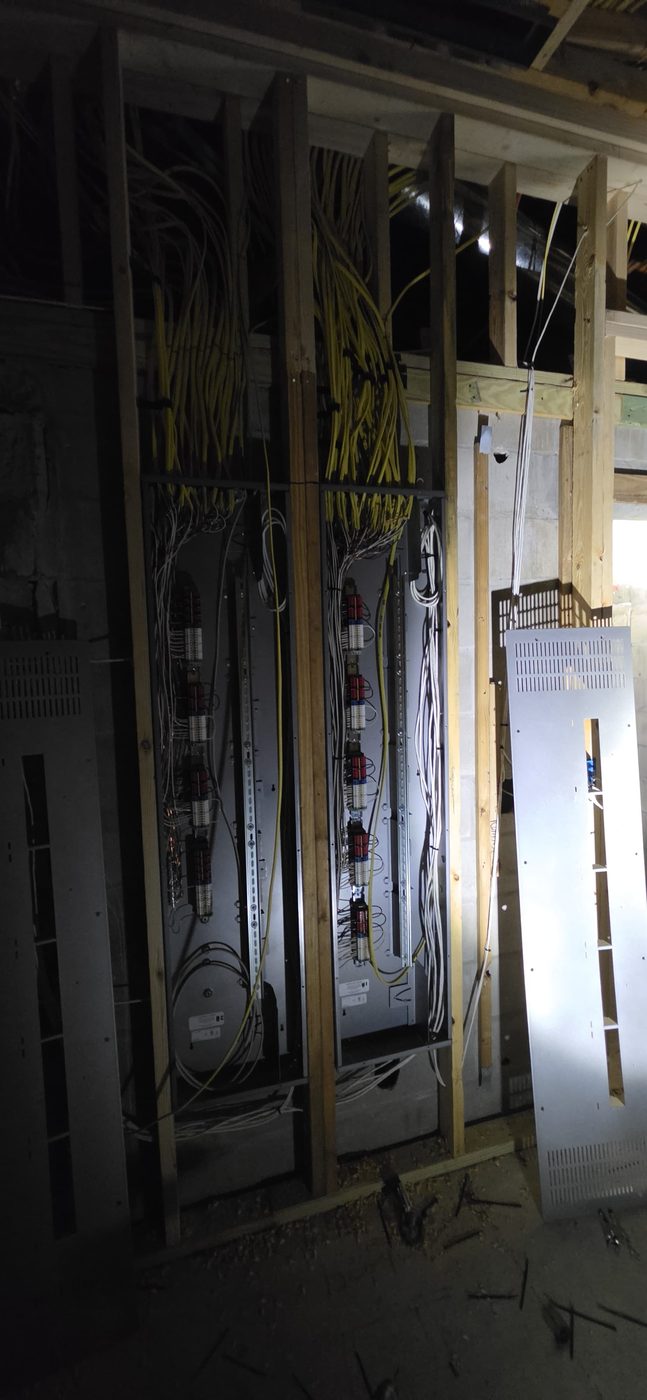
Retrofitting wiring into a completed home can sometimes be done without visible damage. Experienced AV installers are often able to route wires where homeowners or general contractors assume it cannot be done.
However, not every wire path can be reached without cutting an access opening.
Prewiring greatly reduces the need for cutting, patching, repainting, and working around finished surfaces. Speakers, televisions, keypads, cameras, access points, and control devices can be planned before construction is complete.
The result is a cleaner finished home with fewer visible cables and fewer last-minute compromises.
Prewiring Prepares Your Home for Future Technology
A complete prewiring plan should be based on how you expect to use your home now and how your needs may change.
Your wiring plan may include infrastructure for:
- Dedicated home theater rooms
- Surround sound systems
- Whole-home audio
- Outdoor televisions and speakers
- Lighting control
- Home automation
- Security cameras
- Doorbell cameras
- Wireless network access points
- Hardwired internet connections
- Motorized shades
- Television locations
- Equipment racks
- Pool and patio entertainment
- Future technology upgrades
You do not have to install every device during construction. However, installing the proper cable now gives you more options later.
It is also helpful to plan one central location for networking, AV distribution, control equipment, and other supporting components. A well-designed rack or cabinet creates a manageable foundation for the systems throughout the house.
Our home automation design and installation services can help connect audio, video, lighting, climate, shades and other compatible systems through an easier control experience.
Professional AV Wiring Makes Your Technology Easier to Use
Most homeowners do not want to study cable types, trace speaker wires, inspect terminations, or troubleshoot equipment racks.
They simply want the system to work.
You should be able to turn on the television, choose what you want to watch, adjust the volume, play music, or activate a scene without wondering which connection has failed this time.
Professional AV wiring supports that experience behind the scenes.
A well-designed system gives each cable a purpose. Connections are secure. Components are accessible. Service slack is managed. Wires are labeled. Equipment can be maintained without creating another tangled mess.
Most importantly, the wiring supports the way the system is supposed to function.
That may require reorganizing an existing cabinet. It may require installing a slide-out rack. It may require replacing damaged cables rather than wrapping them in more tape. For a new home, it may mean creating a complete prewiring plan before construction reaches the drywall stage.
The right solution depends on the house, the equipment, and the condition of the existing installation.
Stop Living With AV Wiring Frustration
You might not spend much time thinking about AV wiring, but we do.
Why?
Because we want you to push a button and enjoy your home.
We want your television to turn on, your sound system to play clearly, your controls to respond, and your equipment to work together without unnecessary frustration.
A quick zip-tie cleanup may make a cabinet look better for a photograph. Expert AV wiring solutions make the entire system easier to use, troubleshoot, maintain, and enjoy.
Whether you have a messy equipment cabinet, intermittent sound, disconnected wires, an unreliable previous installation, or a custom home that needs to be prewired, Entertainment Pros can help.
Contact Entertainment Pros to request an onsite consultation. Let us clean up the wiring, correct the underlying problems, and create an AV system that works the way it should.