
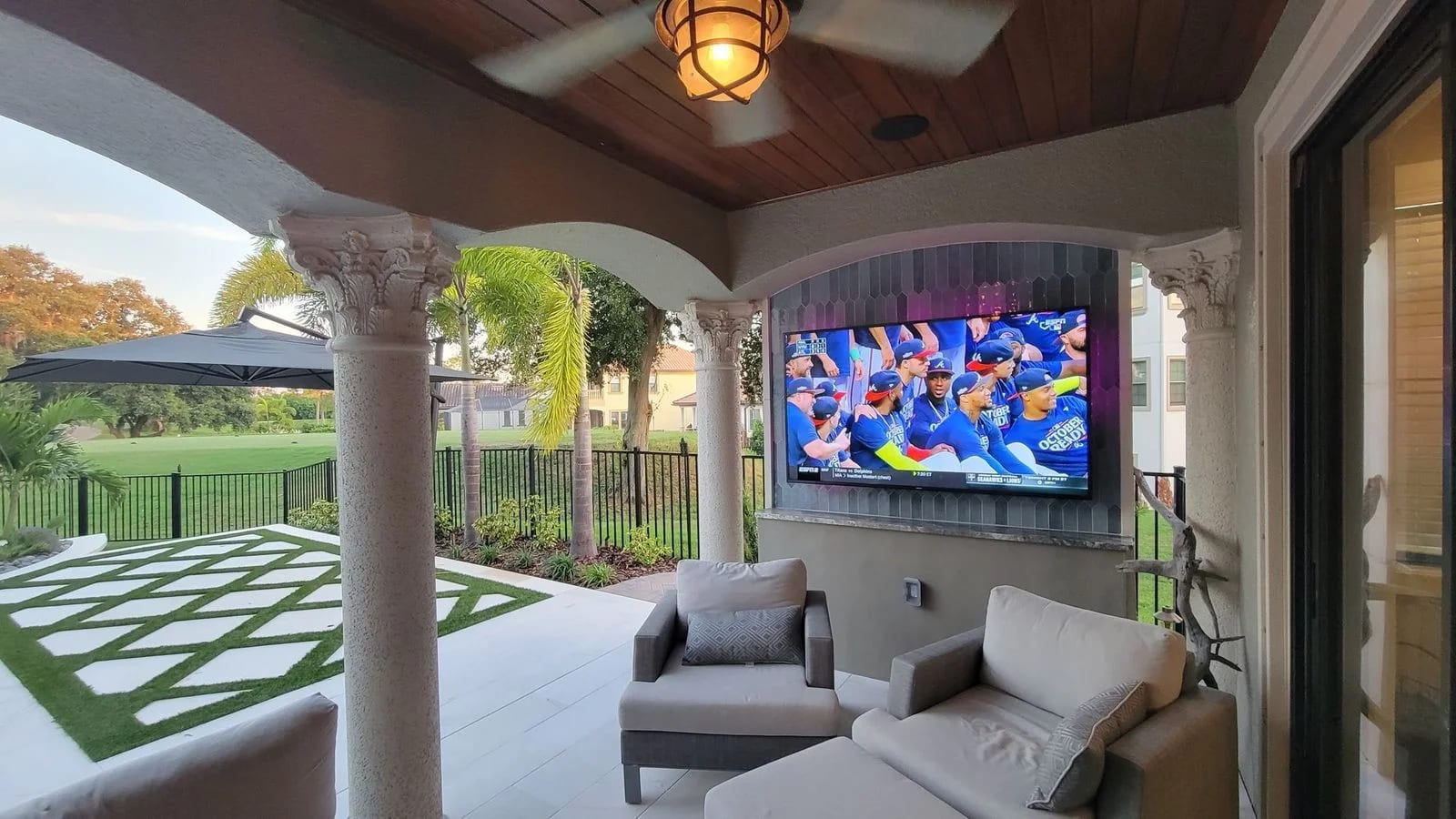
Do You Actually Need an Outdoor TV?
It starts the same way every time. Somebody pictures a Saturday on the lanai, the game on, a breeze coming off the water. Then they look up what an outdoor TV costs, and the TV sitting unused in the garage starts looking awfully reasonable.
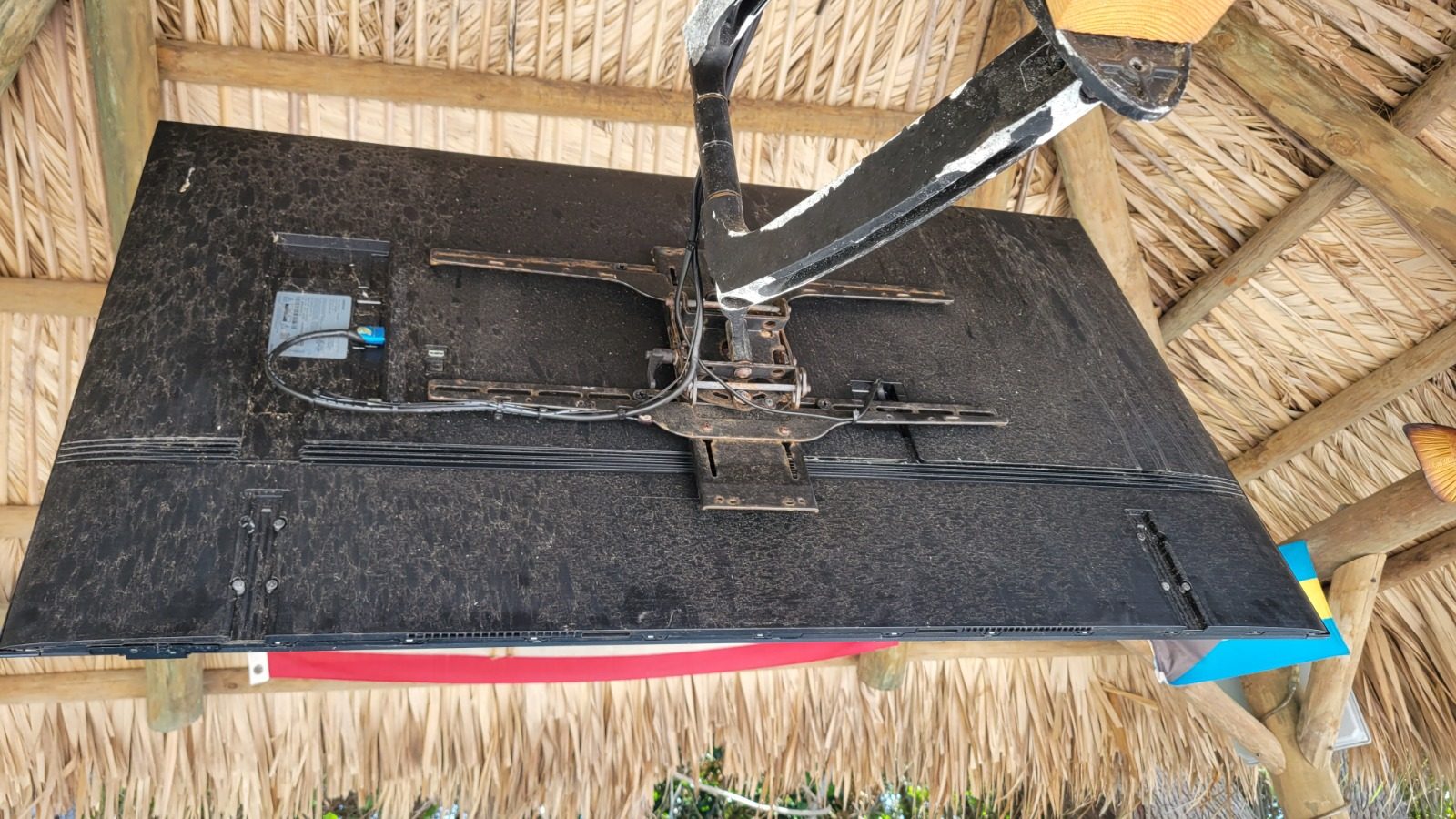
Fair question, and we get asked it constantly: will an indoor TV survive out there? Sometimes, yes. We have seen indoor sets last four years on a deep covered porch, and we have seen one die in a single August on a pool deck. The difference is never luck. It comes down to sun, water, and salt, in that order.
Here is how to tell which side of the line your patio falls on.
When You Need a Real Outdoor TV
These are the situations where we will not install an indoor set, even if a customer asks. Not because we want to sell a more expensive television, but because we would rather not come back in eight months to take a dead one off the wall.
Your Warranty Ends the Day You Hang It Outside
Start here, because it decides everything after it. Indoor televisions are warranted for indoor use. Mount one outside, even somewhere well protected, and the coverage is gone. If humidity kills your TV in month seven, that is your problem, not the manufacturer's.
Outdoor televisions are warranted for exactly what you are about to do with them. That is a real part of what the extra money buys, and it is the part people forget to put in the comparison.
Salt Air Eats Electronics
Anywhere near the water, salt is the thing that gets you. It does not need rain or a storm. It arrives on the breeze, settles on the boards inside the set, and corrodes them quietly for months before anything looks wrong.
An indoor TV has no defense against it. The chassis is not sealed, because it was never meant to be. Even inside an enclosure it is breathing the same salty air, just more slowly. On the beach side of Pinellas, this is not a judgment call. Outdoor sets use sealed enclosures specifically so salt cannot reach the electronics, and it is the single biggest reason they last out here.
If Rain Can Reach It, the Decision Is Already Made
Obvious, but worth saying because people gamble on it anyway. An indoor TV and direct rain is a one time event. Not a slow decline, an ending. One good afternoon storm blowing sideways under the overhang is enough.
Outdoor televisions carry an IP rating precisely for this, and we break down what those numbers actually mean further down. If your spot is open to the sky, stop reading and buy the outdoor set. The repair bill is always larger than the difference in price.
Glare Is What Actually Ruins It
Everyone worries about the TV dying. What people actually complain about is that they cannot see anything.
Take a regular TV outside on a bright afternoon and you get a mirror. Washed out color, black bars that reflect your own patio back at you, and a screen you end up squinting at. Outdoor televisions fight that with much higher brightness, measured in nits, plus anti glare coatings and panels tuned for high ambient light. That is the whole reason a full sun model exists.
Worth remembering that the picture is only half of it. A screen you cannot hear over the pool pump is its own kind of disappointment, so look at outdoor sound at the same time.
Full Sun Is a Heat Problem, Not Just a Glare Problem
This is the one people underestimate. Direct Florida sun on a dark screen does more than wash out the picture. It bakes the panel. Indoor sets are engineered for a climate controlled room, not for surface temperatures on a west facing wall in July, and the heat degrades components faster than anything except salt.
A covered patio helps, but it is not automatically safe. If sun swings under the roof for two hours every afternoon, or if rain mist blows in sideways, you are still in outdoor TV territory. The only genuinely forgiving spot is a deep, fully shaded, consistently dry lanai.
Covers and Boxes Buy Time, They Do Not Buy Immunity
Two problems with the cover approach.
The first is that it depends on you. Every time, without forgetting, including the afternoon you left for dinner and a storm rolled through. One miss undoes the whole strategy.
The second is bigger: a cover does nothing about the things that actually kill outdoor televisions. Humidity still gets in. Salt still gets in. And a sealed box with a running TV inside traps heat, which can shorten its life rather than extend it. A cover slows the decline. It does not stop it.
When an Indoor TV Outside Is a Reasonable Bet
We are not going to pretend it never works. There are real situations where putting an indoor set outside is a sensible call, as long as you go in knowing what you signed up for.
A Deeply Covered Lanai
The best case is a lanai that is genuinely an outdoor room. Solid roof, set well back, no direct sun on the wall at any hour, no sprinkler spray, no rain blowing in. The further inside that envelope the TV sits, the better it does. Screened porches and recessed condo balconies often qualify, since they tend to be sheltered on three sides already.
Well Inland, Away From the Salt
Get far enough from the Gulf and you remove the biggest single threat. Humidity is still working on the set, because this is Florida, but without salt the corrosion clock runs much slower. It does not make an indoor TV weatherproof. It just takes the fastest killer off the table.
A Sealed Enclosure on a Covered Lanai
A real enclosure is different from a slipcover. A proper housing keeps out dust, insects and incidental splashes, and on an already covered lanai it adds a genuine layer of protection.
Just know its limits. It cannot regulate humidity, and if it is not ventilated properly it will cook the television it is protecting. Treat it as risk reduction, not a solution.
You Are Fine Treating It as Disposable
Honestly, this decides it more often than any spec does. If you are genuinely at peace with buying a new television every one to three years, an indoor set can pencil out. Something will kill that television eventually: a storm, a cover you forgot to put back on, or just humidity doing what humidity does in Florida.
That trade works fine for a television nobody watches but a few times a year. The trade stops working once the patio turns into where everyone actually hangs out. At that point most people would rather buy the right television once and stop thinking about it.
You Already Own the TV
If there is a decent television sitting in the garage doing nothing, hanging it outside is a cheap way to learn how you will actually use the space. Maybe you find you are out there four nights a week. Maybe you find it goes unwatched all summer.
That is useful information, and it costs you nothing but a TV you were not using. Go in expecting a short life, and let it tell you what to buy for real.
SunBrite vs Samsung: Which Outdoor TV Actually Fits Your Space
Two brands come up in almost every outdoor TV conversation we have: SunBrite and Samsung. Both build genuinely good televisions. The mistake most people make is shopping by brand first.
Shop by sunlight instead, then check the weather rating. Get those two right and either brand will make you happy. Get them wrong and you will spend every afternoon squinting at an expensive screen, wondering why it looked so much better in the showroom.
First, Direct Sunlight or Indirect Sunlight?
This is the whole decision, and it takes about a minute to answer. Go stand where the TV is going. Do it around two or three in the afternoon, because that is when the Florida sun is worst and, not coincidentally, when you will be out there watching.
Then look at the wall, not the sky. You are asking one question: does sunlight physically land on the spot where the screen will be?
- Indirect sunlight. The space is bright, but no sun reaches the wall. A fully covered lanai, a screened porch, a patio with a solid roof over it. Bright ambient light, zero direct rays on the panel.
- Partial direct sunlight. Sun touches the screen for part of the day. A pergola with slats, a deep overhang that lets in low morning or late afternoon light, a covered patio that is open on the west side.
- Full direct sunlight. An open pool deck, an uncovered patio, a summer kitchen with nothing overhead. Sun lands on the screen and stays there.
Manufacturers sort their models the same three ways, which makes the shopping simple once you know your answer. Full shade models for fully covered areas with indirect light only. Partial sun models for spaces that catch a few hours. Full sun models for anything exposed.
Putting a fully covered model in a full sun spot is the most common mistake we get called out to fix. It is also the most expensive, because the fix is a new television.
One thing to know about brightness numbers. Manufacturers do not all measure the same way. Some publish peak brightness, which is what a small area of the picture hits for a moment. Others publish sustained full screen brightness, which is what the entire panel holds all day. Sustained is the number that matters outdoors, and it is always the lower of the two. SunBrite rates the Veranda 4 at 600 nits sustained full screen, while the older Veranda 3 was advertised at 1,000 nits peak. The newer set is not dimmer in practice. It is measured more honestly.
What the IP Rating Actually Means
Every outdoor TV lists an IP rating, usually IP54, IP55 or IP56. IP stands for Ingress Protection, and it is a real international standard (IEC 60529), not marketing language. Two digits, and each one means something specific.
The first digit is solids and dust. On outdoor televisions it is almost always a 5, which means dust protected: enough dust cannot get in to interfere with how the set operates. A 6 would mean completely dust tight.
The second digit is water, and this is where the models actually differ.
| Rating | Protects against | What that means on your patio |
|---|---|---|
| IP54 | Splashing water from any direction | Fine under a solid roof. Handles humidity, spray and blowing mist, but it is not built for direct rain. |
| IP55 | Low pressure water jets from any direction | The common rating on quality outdoor TVs. Takes real rain and a rinse from the garden hose. |
| IP56 | Powerful water jets | The tougher tier. Worth having for full exposure, driving storm rain and pressure washing nearby. |
For a covered lanai in Pinellas, IP54 will survive. For anything that sees actual rain, and certainly for a pool deck, go IP55 at minimum. We lean toward IP56 on waterfront installs, because wind driven rain off the bay does not arrive politely from above.
One caveat worth saying out loud: an IP rating covers the television, not the wiring behind it. A perfectly rated set with an unsealed connection is still a callback waiting to happen. That part is on the installer.
SunBrite, Model by Model
SunBrite builds outdoor televisions and nothing else. Sealed aluminum chassis, gasketed compartment for the connections, no cover required. Four families, sorted by exactly one thing: how much light the screen has to fight.
- Brightness 600 nits sustained
- Sizes 65 and 75 inch
- Screen Direct lit, anti glare
Right call for a roofed lanai or screened porch with indirect light only. Put it anywhere the sun reaches and you will be disappointed.
- Brightness Around 700 nits
- Best for Pergolas, deep overhangs
- Screen Anti glare
The safe middle. If your patio is covered but still gets a slice of afternoon sun, this is usually the one.
- Brightness 1,500 nits
- Screen Tempered glass shield
- Built for Heat and glare
Pool decks and open patios. More than twice the punch of a shade model, and you can feel the difference at noon.
- Brightness 1,500 nits
- Screen Brightest anti glare
- Built for Worst case exposure
For the brutal spots. West facing, full exposure, water throwing glare back at the screen all afternoon.
Samsung The Terrace, Model by Model
Samsung comes at this from the opposite direction. The Terrace is a QLED panel, the same picture technology in their high end indoor sets, wrapped in an IP55 weather resistant body. Full Tizen smart platform built in, so apps and voice control work the way they do on your living room set.
If picture quality is what you care about most, this is the lineup to look at. It splits two ways.
- Sizes 55 to 85 inch
- Panel QLED 4K, anti glare
- Weather IP55 rated
- Smart TV Full Tizen built in
Covered patios and shaded outdoor rooms. The best picture you can put under a roof, and the widest size range out there.
- Brightness 2,000+ nits
- Sizes 65 to 85 inch
- Panel QLED 4K, anti glare
- Weather IP55 rated
The brightest set in this comparison. Open pool deck in July, and it still holds up.
So Which One
Honest answer: they are both good, and they are good at different things.
Swipe to see the full table
| SunBrite | Samsung The Terrace | |
|---|---|---|
| What it is | Outdoor television, purpose built | Indoor QLED engineered to live outside |
| Light conditions covered | All three, four separate series | Two, partial sun and full sun |
| Picture quality | Very good, tuned to beat glare | Excellent, better contrast and color |
| Smart platform | Varies by model, we usually add a streamer or tie it to your control system | Full Tizen built in |
| Weather protection | Sealed aluminum body, gasketed connection bay | IP55 rated enclosure |
| Size range | Roughly 49 to 75 inch by series | 55 to 85 inch |
| Where it wins | Harsh exposure, salt air, set and forget | Picture first, shade to partial sun |
What We Would Put In Your Space
Model lineups and pricing move around every year. We confirm current specs before anything gets ordered, and we will tell you when the cheaper model is the right one.
Recent Outdoor Installs
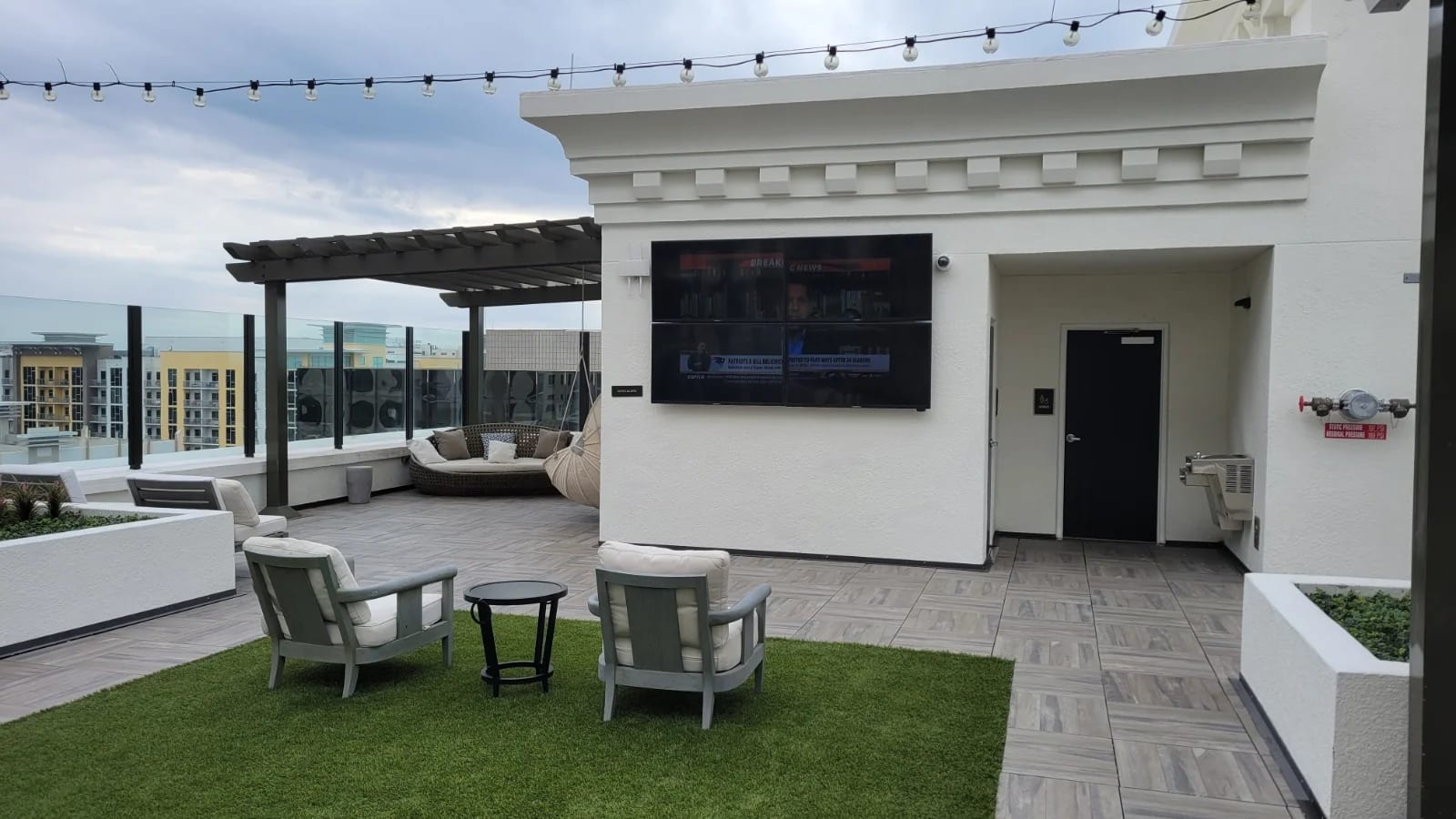
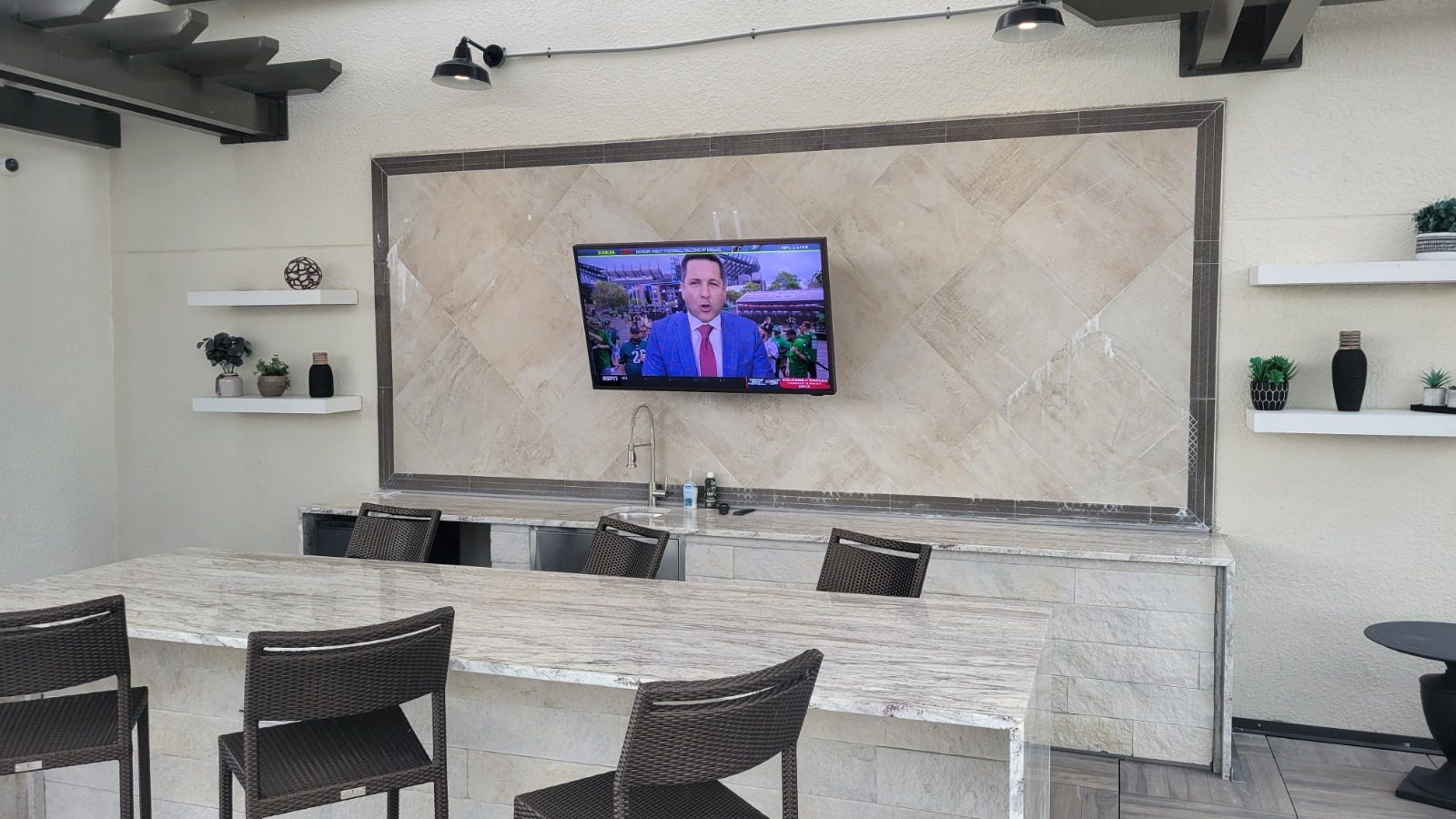
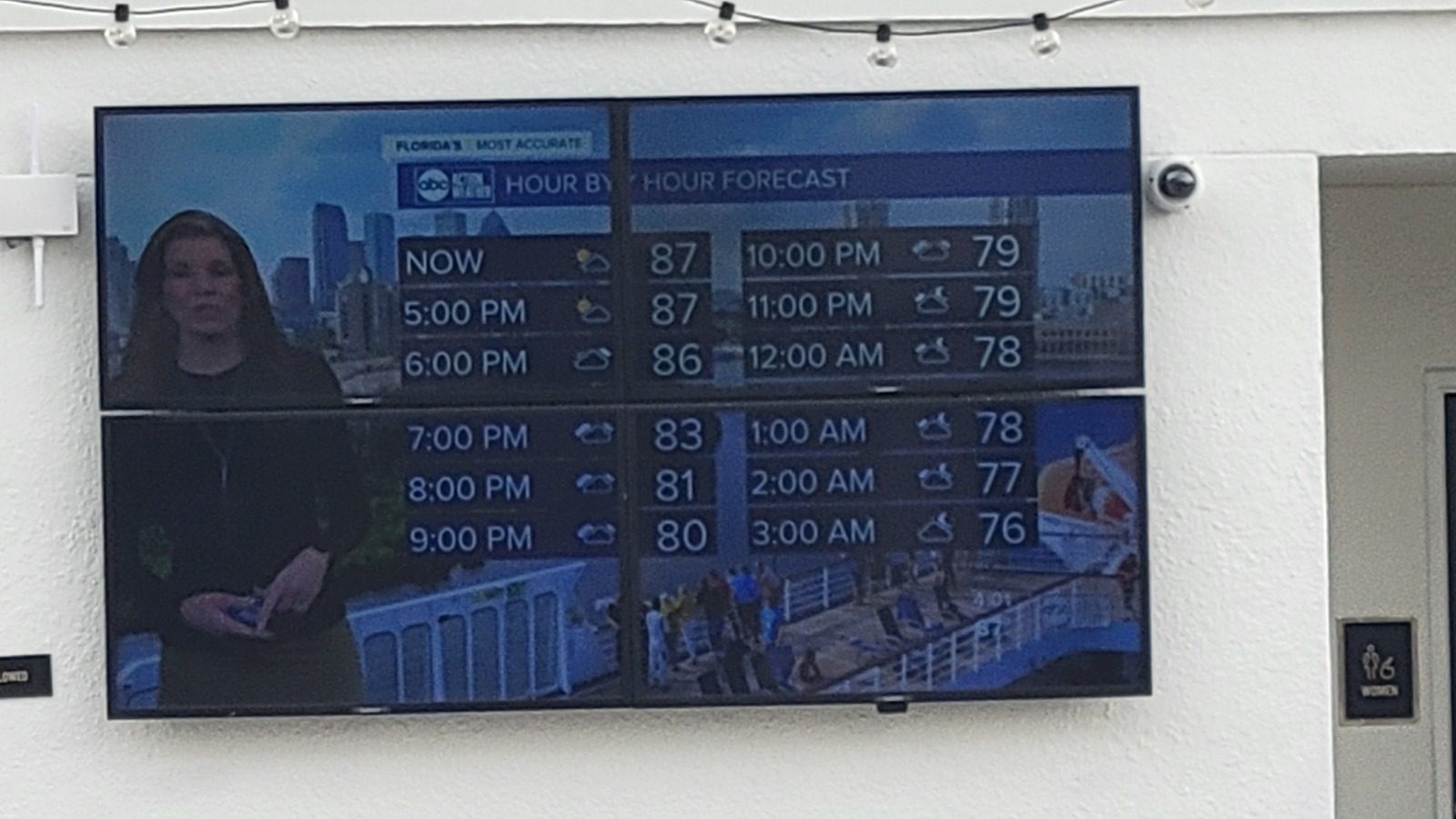
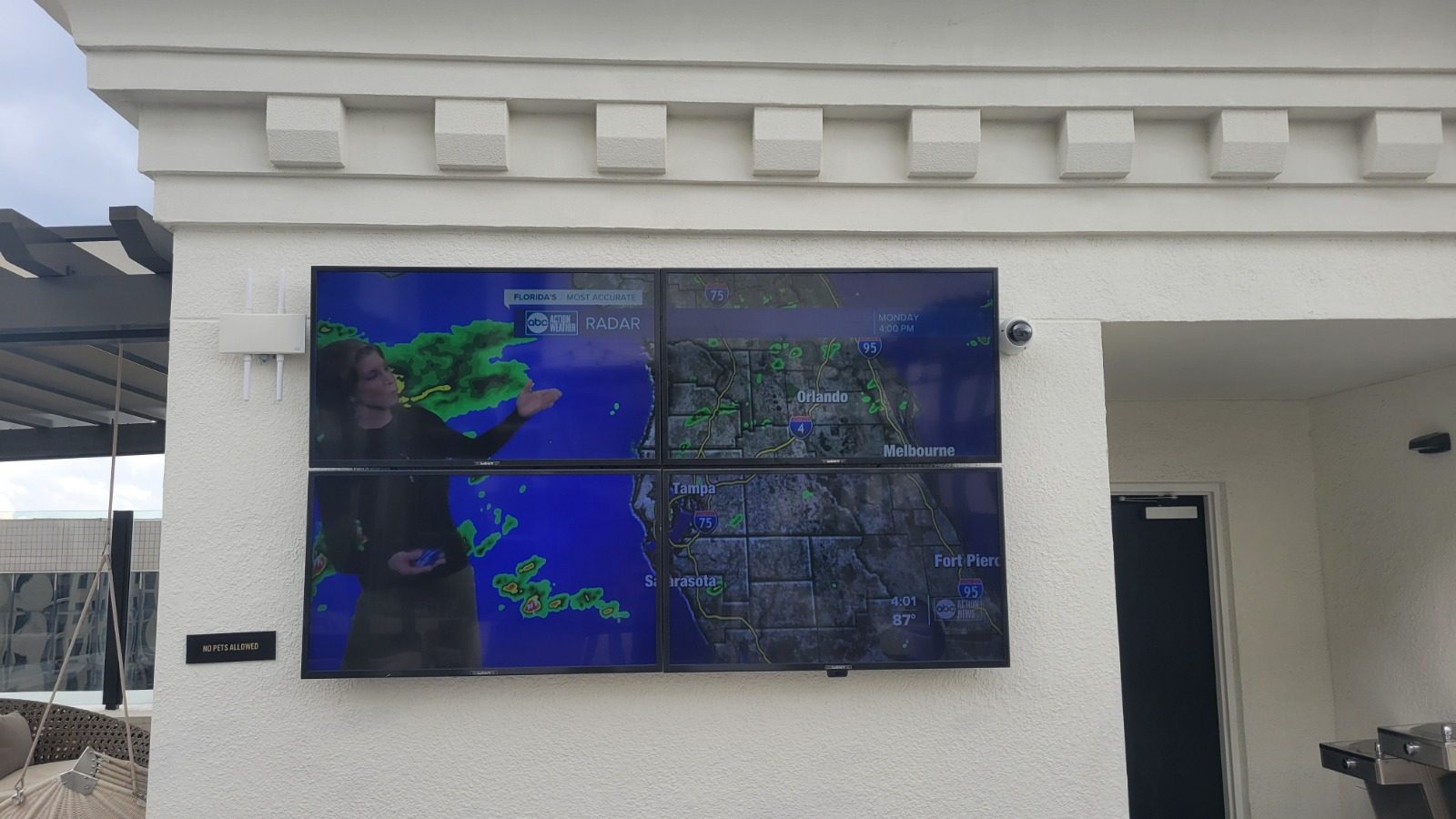
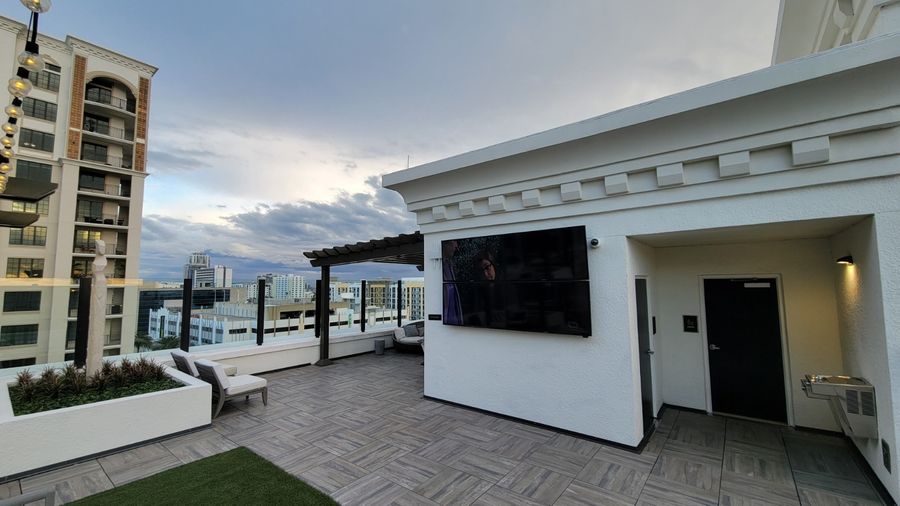
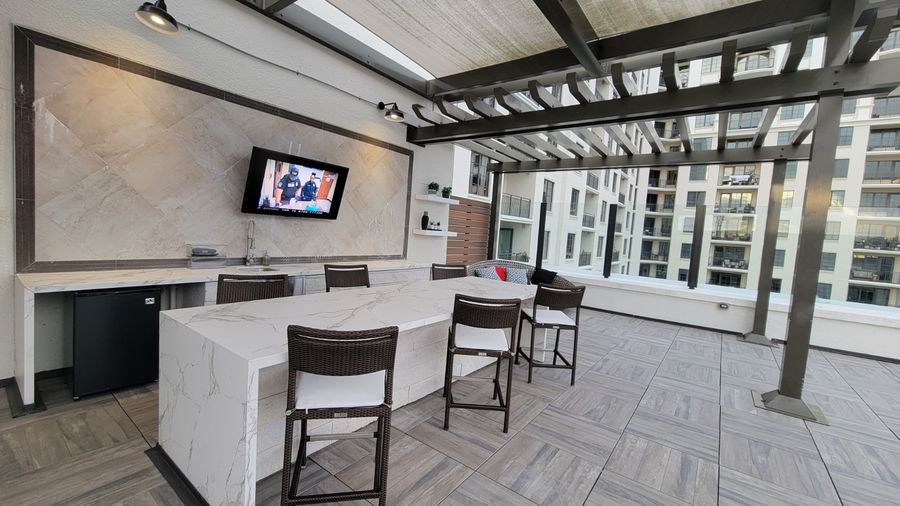
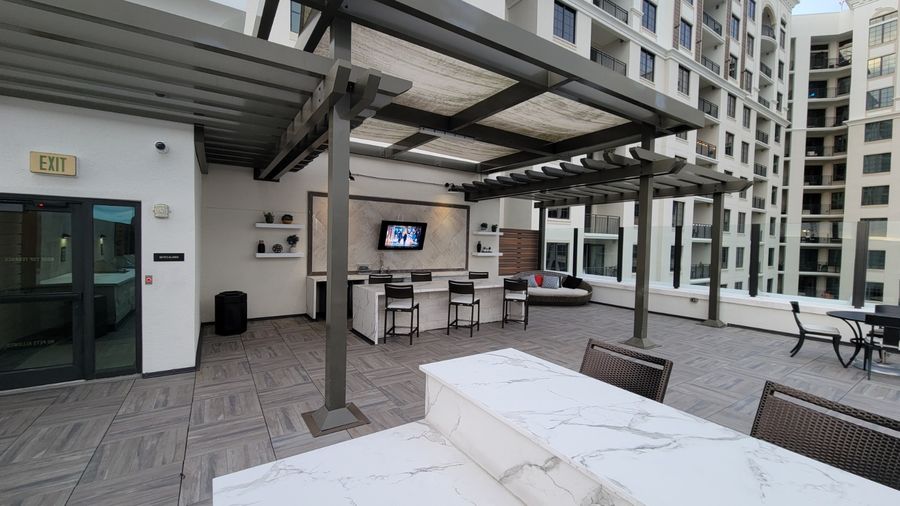
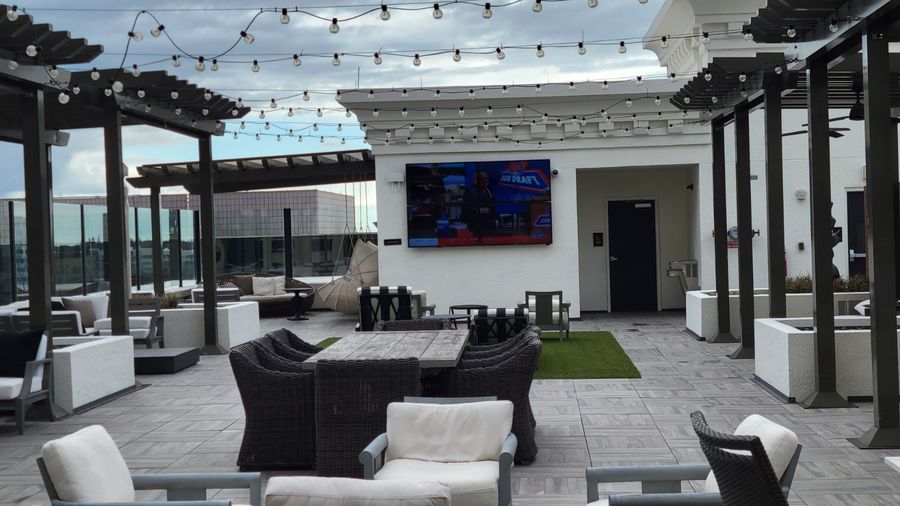
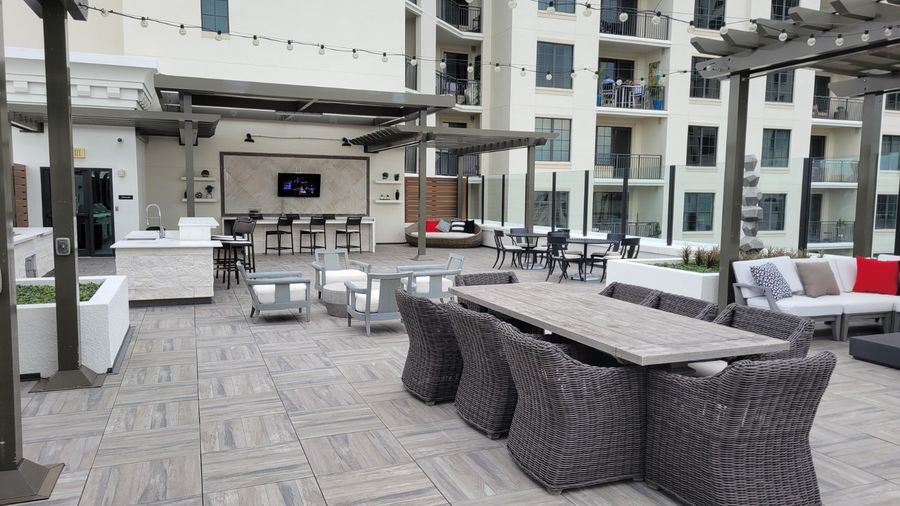
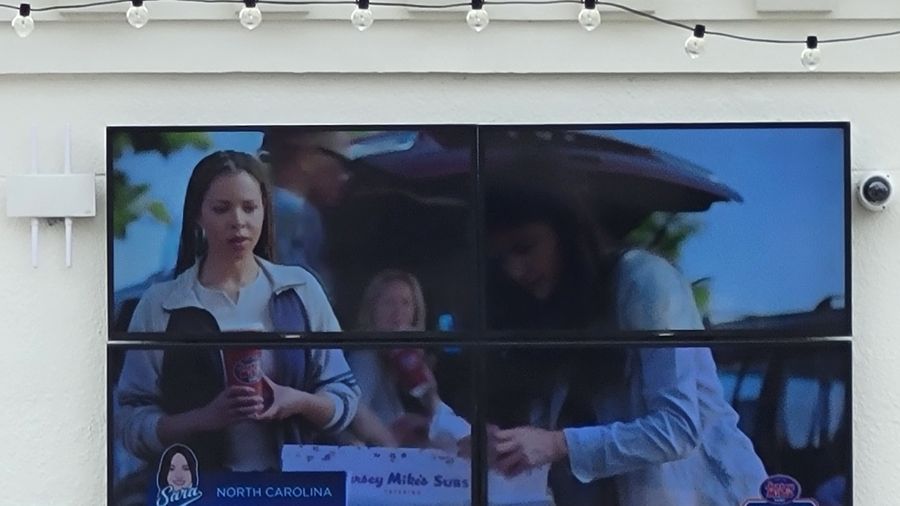
A few of ours around Pinellas. Rooftop amenity decks, covered outdoor kitchens, and one very good tiki hut.
Do Not Just Take Our Word For It
We install these for a living, so we are hardly neutral. If you want independent opinions before you spend the money, these are worth your time:
- RTINGS puts televisions through the same lab tests in a controlled room and publishes the raw measurements, including The Terrace. The best place to look up real brightness numbers instead of marketing ones.
- CNN Underscored reviewed The Terrace hands on and still rates it the best outdoor TV on the market.
- Residential Systems reviewed the SunBrite Veranda Series from an installer's point of view, which is a different and useful angle.
- The manufacturers themselves, SunBrite and Samsung, for current model lineups and full specification sheets.
The Short Version
If your TV lives fully under roof, out of the salt, and you are fine replacing it in a few years, an indoor set will work. Plenty of people go that route on purpose.
Everywhere else in Pinellas, and especially anywhere near the water, a purpose built outdoor TV costs more once instead of a little every couple of years. That is the whole calculation.
Not sure which category your patio falls into? That is the easiest thing in the world for us to sort out. Whether it is a single television, a full outdoor audio system, or the whole backyard, tell us about your project and we will come look at the space.