
A client bought a new TV from us and asked us to swap it for the old one. Take the old screen down, put the new one up, clean up, done. Should've been a simple morning.
Then I got behind the TV.
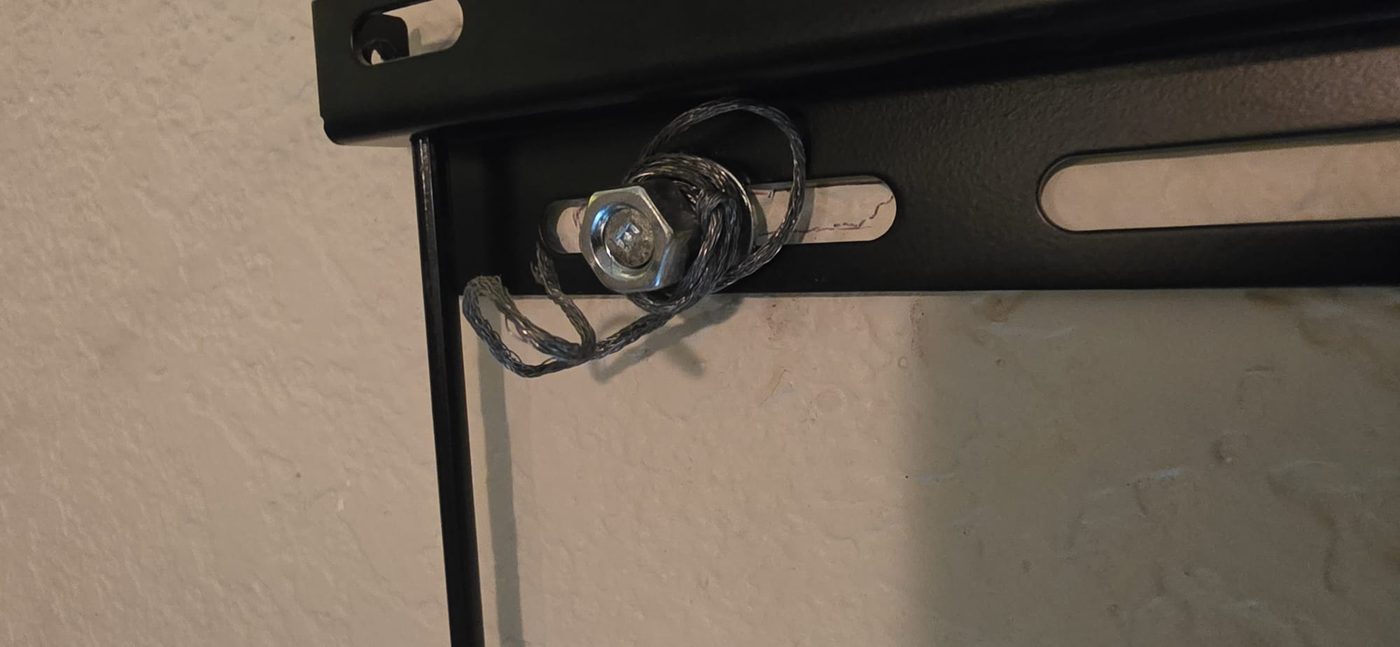
Whoever hung it used cement anchors but hadn't installed them all correctly. The nut wasn't able to be tightened securely so they wrapped a piece of wire around the bolt and used it in place of one.
A wire. Wrapped around a bolt. Holding a television on a wall above a couch where people sit every night.
I've pulled plenty of bad mounts off; however, this one made me think about how this was an installation failure. If you run into something such as this, you stop, revisit the project. Make sure it is done safely and completely.
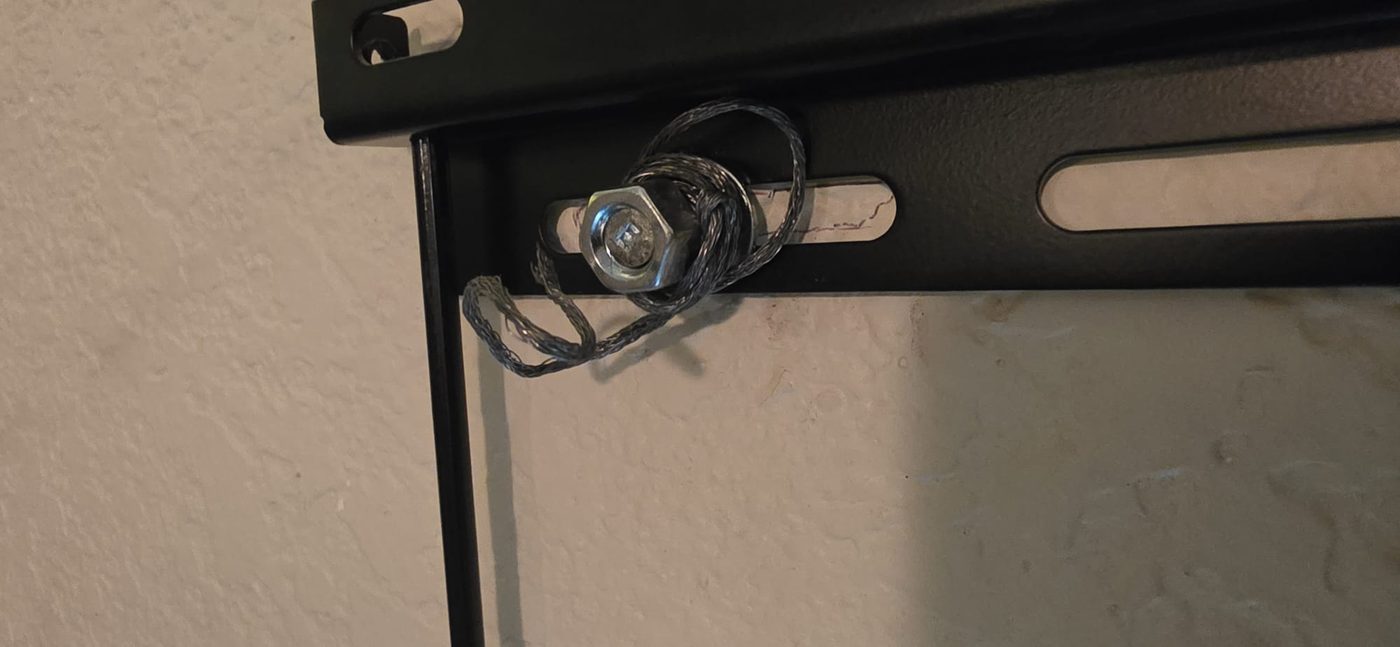
The one which actually came off the wall
Another client wasn't as lucky.
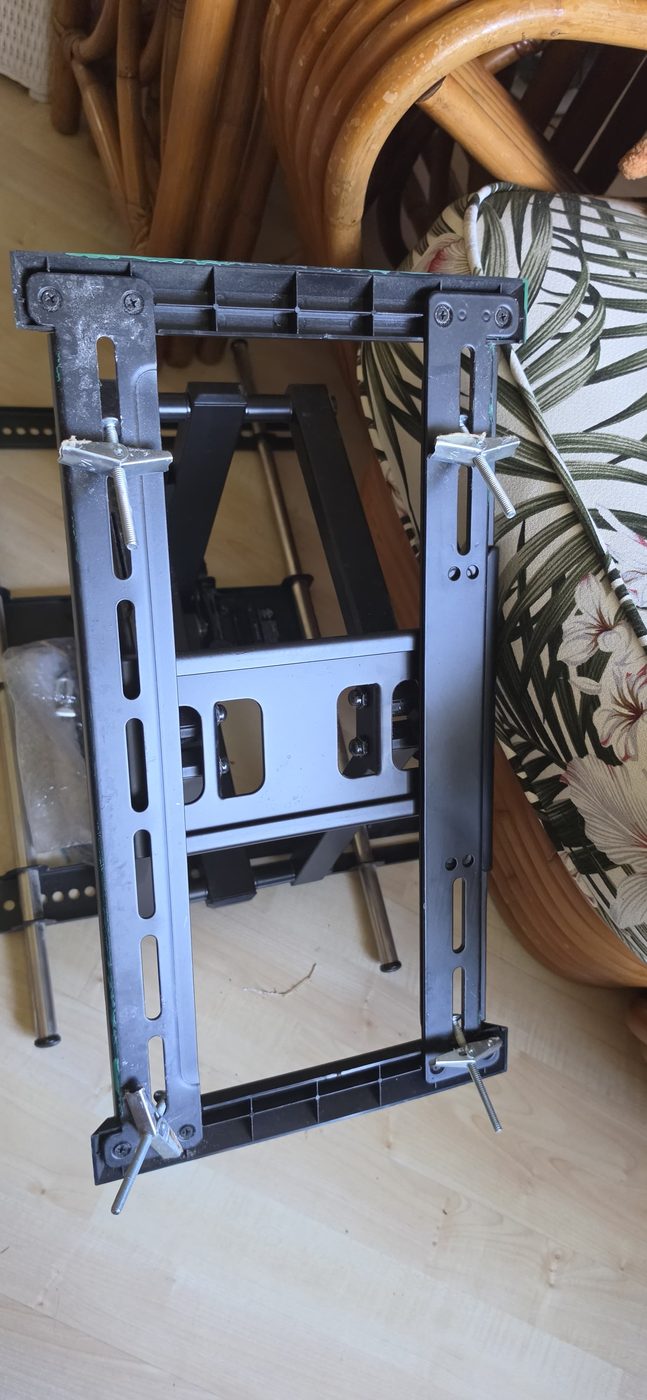
A handyman hung their TV on an articulating mount, the kind which swings out from the wall so you can see the screen from different angles. He put it into drywall with butterfly anchors (toggle bolts).
For a while it held. The thing about a bad mount- it doesn't usually fail right away. It takes time and then one day it's on the ground. And the TV (and everything or anyone below it) is never quite the same.
The family used it the way you're supposed to use an articulating mount. Move it around as you need it. Every single time it moved, those anchors worked the holes a little bigger. Drywall is gypsum pressed between two sheets of paper. It's not structural. It crumbles.
They called me when they did a Google search to reinstall their new TV. They weren't going to use a low-priced handyman again.
Why an articulating mount punishes drywall
A flat mount keeps the screen tight to the wall, so the weight pulls almost straight down. Swing that same screen eighteen inches out on an arm and you've built a lever.
At full extension the top bolts get pulled straight out of the wall while the bottom ones get pushed in. Run the numbers on a typical setup and the top fasteners can see well over a hundred pounds of outward pull. Every time somebody moves it, the load cycles. I even hang from my mounts before I'm done. I want to make sure they are as safe as they can be.
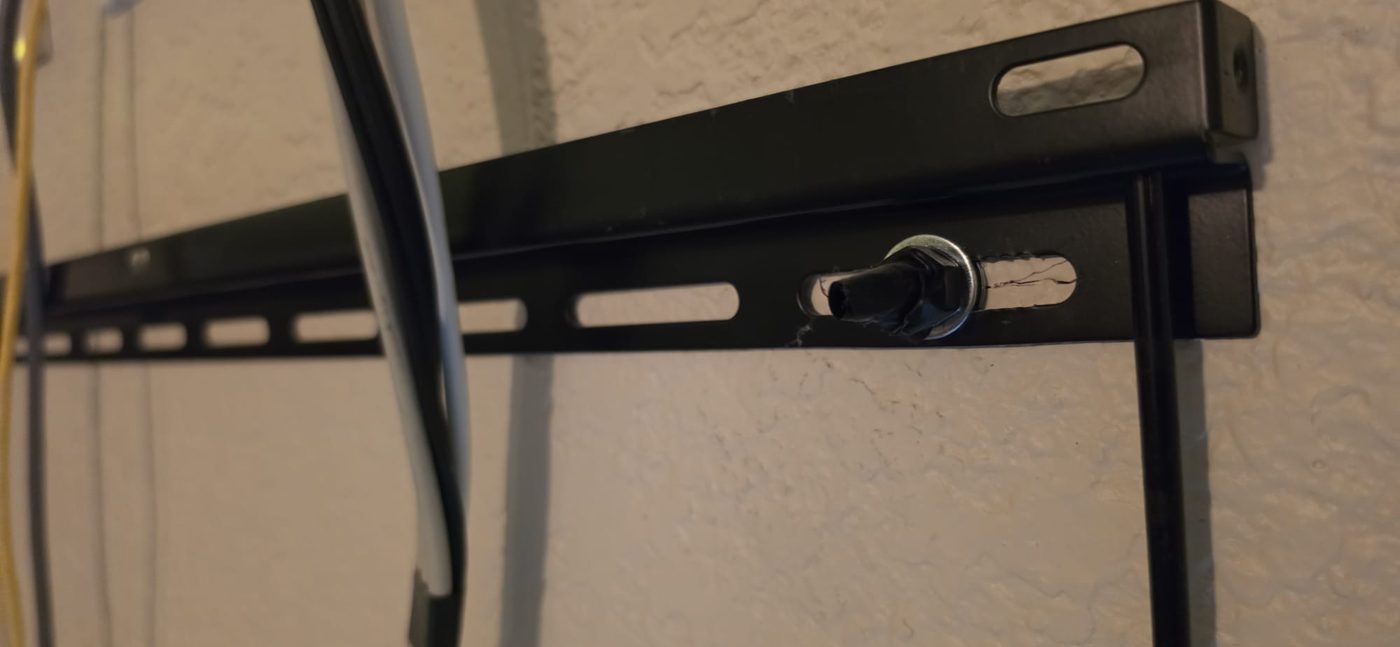
Studs handle that all day. Drywall gives up, and toggle bolts set in drywall give up right along with it, whatever the number on the package says. Those ratings assume a static load hung once and left alone. A family swinging a screen out twice a day for three years is a completely different test.
How Entertainment Pros Mount a TV
Seven steps. The order matters more than people expect. Set your room up below and the steps rewrite themselves with your numbers.
Screen center to the floor. Drag anything below and watch it move.
1Sit down before you measure anything
Sit where you'll actually watch. Couch, recliner, wherever you land. Your eyes should hit somewhere in the center of the screen. Most TVs should be around "Art Height", where your eyes are 2/3 up from the bottom while standing. Lower and you feel as if you are "looking down" on the news anchor. Too high and you're visiting your chiropractor.
Mark the spot with painter's tape and live with it for an evening if you can.
2Find the studs, then prove you found them
A stud finder gets you close. A small finish nail or screwdriver through the drywall tells you the truth, and the hole disappears behind the mount.
Studs usually sit 16 inches apart, sometimes 24. Find the edges of one, then mark its center. Your lag bolts belong in the middle of solid wood.
Concrete block is common in Pinellas homes, especially on exterior walls. Block needs masonry anchors and a hammer drill, and a stud finder is useless on it. Tapcons are not best suited for this.
3Know what's inside the wall before you drill
Romex (electrical lines), water lines, and drain stacks all live in walls. So do the old cable runs nobody documented.
Look at what's directly below on the other side of that wall. A bathroom, a kitchen, an outlet stacked underneath. Those tell you what might be in there.
4Match the mount to the TV and the wall
Check the VESA pattern, which is the bolt hole spacing on the back of the screen, and check the weight rating with real margin. A mount rated right at your TV's weight is a mount with nothing left over.
Articulating arms need to be mounted on studs, full stop. If the backing is questionable, the answer is a plywood backer behind the drywall or a different spot, never an anchor.
5Lag into wood, with real washers
Lag bolts sized for the mount, driven into stud centers, with flat washers underneath the heads. The washer spreads the clamping force across the bracket instead of letting the head chew through it.
Snug, then a quarter turn. Overtightening crushes the wood fibers and you lose the grip you just made.
Anything wrapped, improvised, or borrowed from another job doesn't belong in a wall bracket. If the washer's missing, go get a washer.
6Run the wire inside the wall
Power and HDMI both want a path. In-wall rated cable and a recessed box behind the screen keep everything out of sight and up to code. Separate boxes. Electrical and Audio/Video cables can NEVER share the same box or outlet.
Do this before the TV goes on the bracket. Fishing cable past a hung 75 inch screen is miserable work.
7Level it, load it, then level it again
Level the bracket empty, hang the screen, then check again. Brackets settle when the weight goes on, and a TV half a degree off reads as crooked to everybody who walks in.
Then turn it on, sit down in the chair from step one, and watch something. That's the only test which counts.
Want these numbers on your phone at the hardware store?
We'll email you this plan: your mount height, your bottom edge, the tilt, and the fastener spec for your wall. No call unless you ask for one.
One email with your numbers. We never sell your information.
Check your inbox.
Your mount plan is on its way. If anything on that wall looks like the two jobs above, call Chip at 727-804-2277 and we'll take a look before you drill.
What I'd tell you before you hire anybody
Size changes everything
A 43 inch screen and an 85 inch screen are different jobs. Past about 65 inches the margin for error in your stud placement shrinks because the bracket gets wider than the stud spacing. Big screens also magnify a crooked mount. Half a degree on a 40 inch TV is invisible. Half a degree on an 85 is all you'll see.
Experience is the whole product
Anybody can drive a screw. Knowing what's behind the drywall, reading a room for the right height, spotting a wall which won't take a mount before you've put a hole in it, that's the part you're paying for. It's also the part you never see, because when it's done right there's nothing to look at.
Whoever shows up should listen first
I ask where you sit, what you watch, who else uses the room, whether the kids move the screen, what you plan to add later. Somebody who walks in with a drill already out hasn't asked you anything yet.
About price
Cheap installs are cheap. There's a reason somebody can hang a TV for seventy-five dollars. They're in and out in forty minutes, they're going into drywall because finding studs takes time, and they aren't coming back.
Good work takes longer. We find the studs, check the wall before we drill, run wire inside it, set the height for where you actually sit, and we stay until you can run the system yourself. Then we clean up. If there is something for you to clean up after the install it is a fail. Installers should respect your home enough to prevent a mess or clean up what they created.
That costs more. It should.
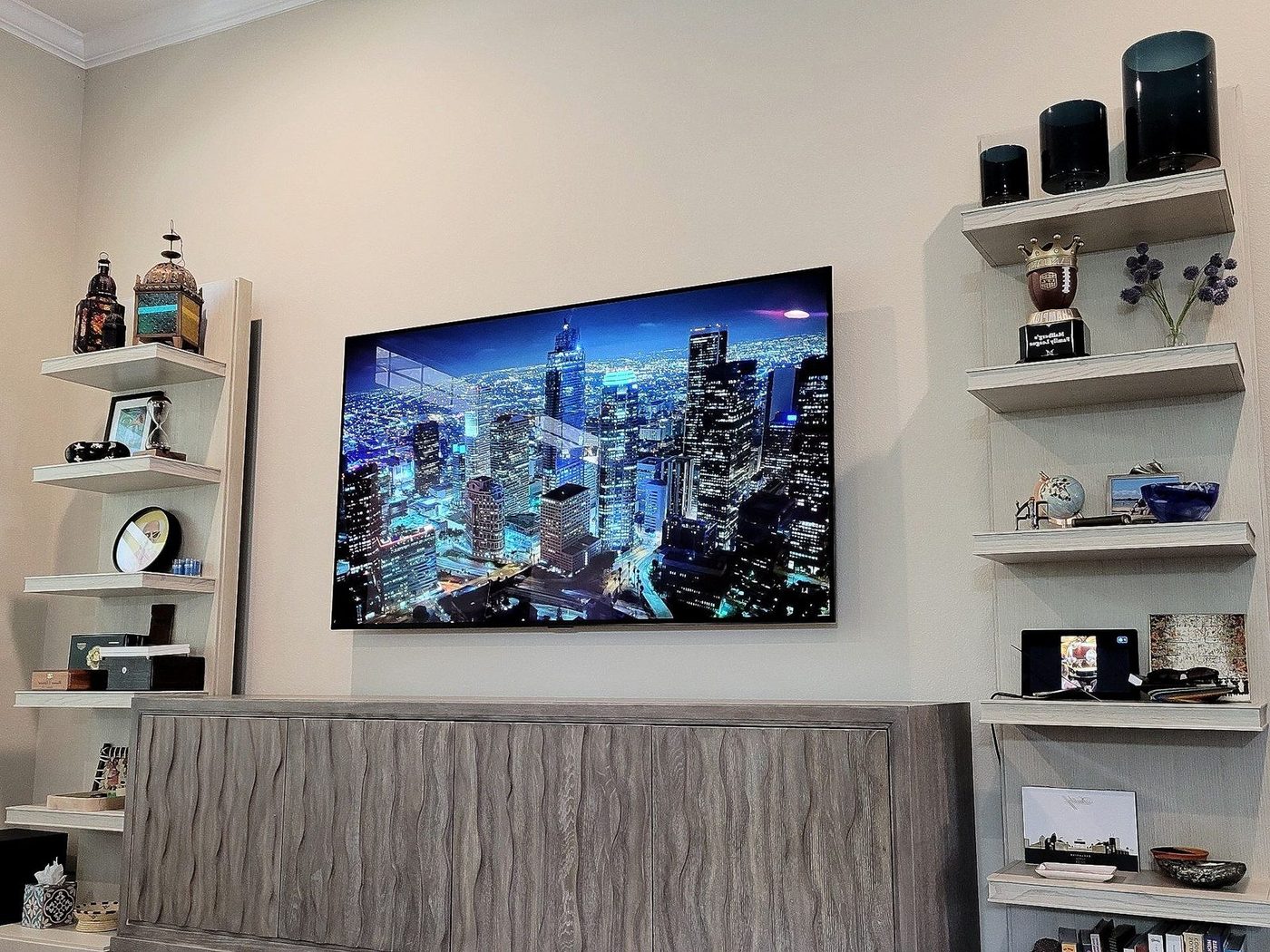
If you've got one of these on your wall
Go stand behind your TV with a flashlight. If you can see plastic anchors or toggle wings where the bracket meets the wall, or the screen shifts when you push on it, call somebody before it becomes our next blog post.
I remount bad installs all the time and we'd much rather do it on a Tuesday than after something lands on your floor. Flooring, a TV, and furniture is expensive. Quality is priceless. So is your family.
Call us at 727-804-2277 or start your project at entertainment-pros.com.